Structured Asset Data as the Foundation for Capacity Planning Accuracy
Accurate asset records are the foundation that capacity planning forecasts actually need to succeed.

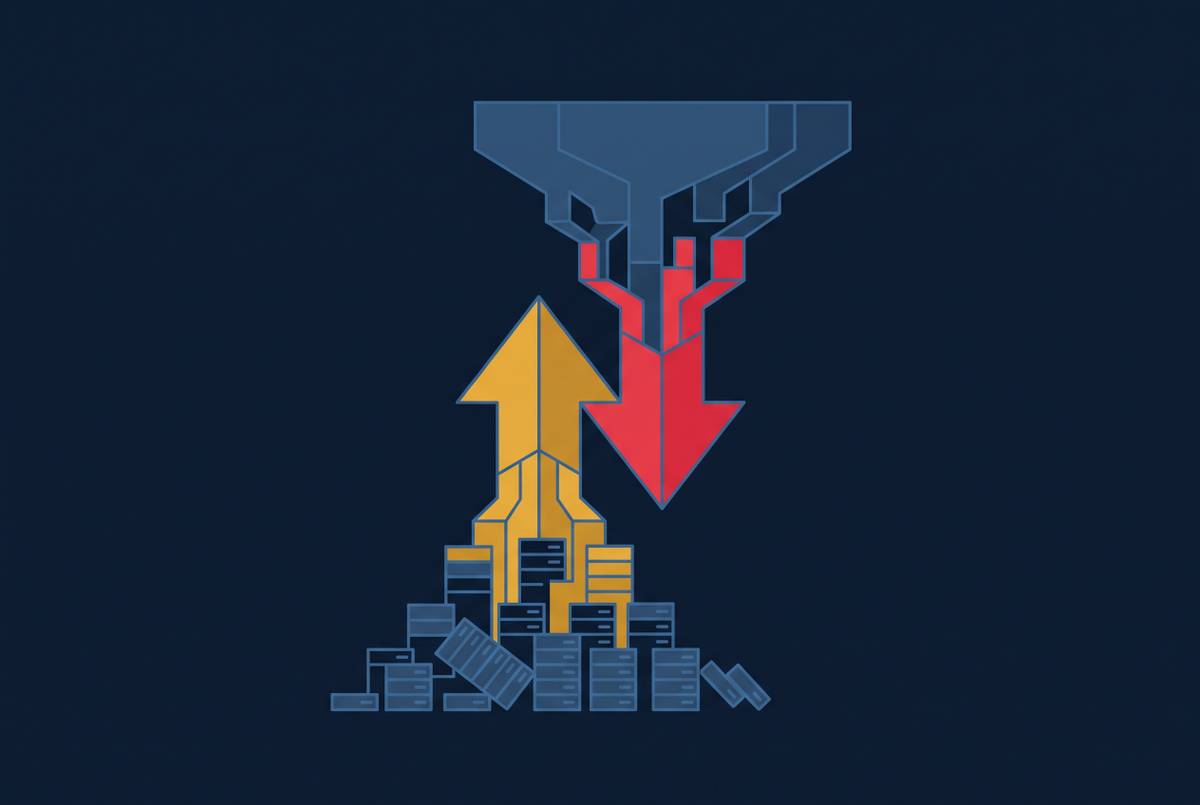
Capacity planning in data centers keeps missing its mark, and the tools used to build those forecasts are not the reason. Scenario modeling software is sharper now, analytics platforms are more granular, and forecasting methods have gotten more sophisticated over the last several years. None of that has fixed the underlying accuracy problem, because the modeling layer was never the weak point. A forecast is only as good as what feeds it: space, power, cooling, and compute resources all need accurate, current records behind them, and when those records are wrong, no amount of modeling sophistication corrects for it. Accurate resource monitoring is the foundation capacity planning stands on, not an optional add-on to it, and when that foundation is missing, the model sits on air.
The usual response to this is "we already have DCIM, we already have dashboards." That response doesn't hold up under scrutiny. DCIM platforms run on rich, real-time facility data, and when the asset data flowing into them is incomplete or stale, the dashboard still looks clean and authoritative on screen. Incomplete or stale asset data behind that polished surface makes the numbers wrong. A dashboard can't distinguish a complete asset record from a gap in one. It just displays what it's given.
Structured asset data in a data center context
If a facility has structured asset data, every physical component, down to the individual unit, gets recorded with typed, machine-readable fields and linked to other records across the building's lifecycle. The range of what needs tracking is wide: servers and GPU nodes, UPS systems, generators, PDUs, transfer switches, batteries, CRAC and CRAH units, liquid cooling manifolds, chillers, switches, patch panels, structured cabling. Each one is a trackable, high-value component, and each one that's missing from the record creates a blind spot somewhere in a planning calculation.
What makes a record structured rather than just documented comes down to the metadata attached to each asset: serial number, purchase date, warranty status, current location, usage history. Those fields need to connect to procurement systems, maintenance systems, and operational systems, so they can't sit isolated in their own register, disconnected from everything else happening in the building. Modern asset platforms support hierarchical tracking, so a chassis links to the blades inside it and the components inside those. They support version control and real-time updates. Older flat registers can't do any of that. They were built for equipment that stayed put, and they fall apart in a facility where hardware is modular, compact, and gets moved constantly.
It helps to separate structured data from documented data, because the two get confused often. A PDF of a manufacturer's spec sheet is documented. It is not structured. Nobody can query it, validate it against a building model, or have it cascade automatically through a change workflow when something gets swapped out. It just sits there as a file, useful to a human reading it and useless to any system trying to act on it.
Asset record drift and why it compounds
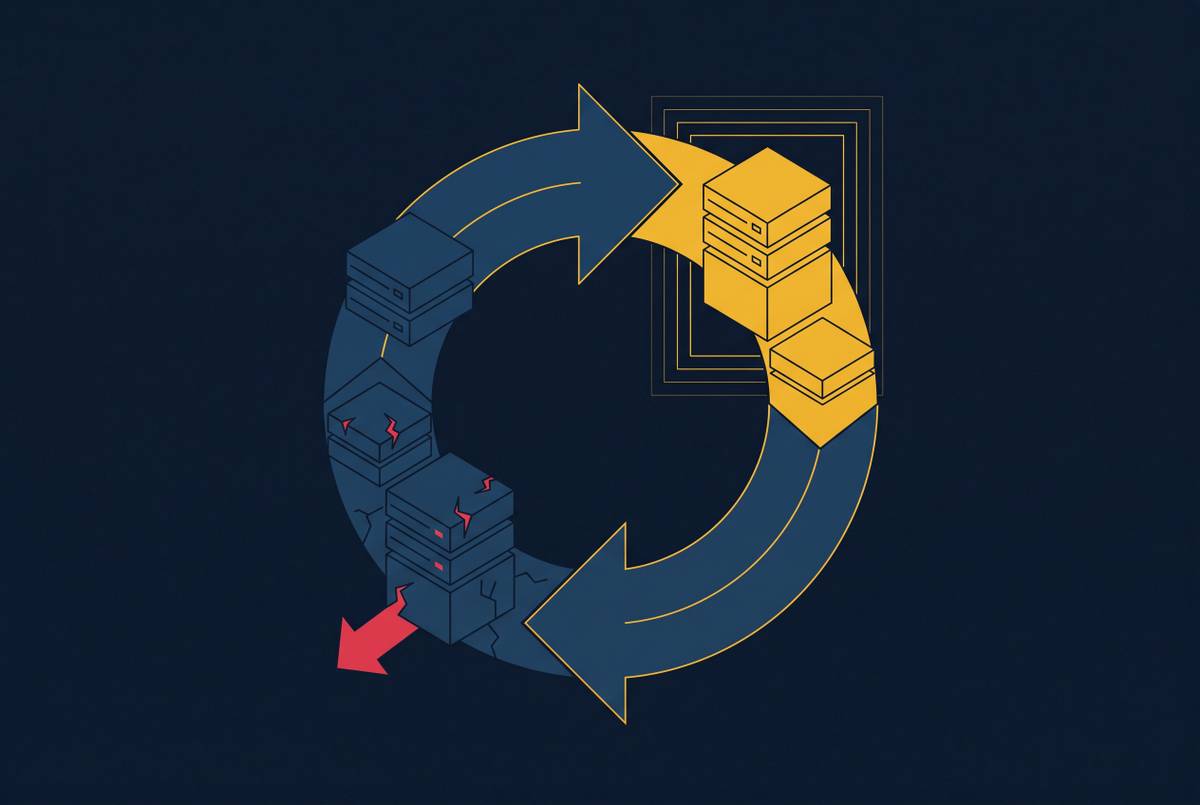
Asset records drift away from physical reality through ordinary, repeated actions: equipment gets moved, additions go undocumented, changes happen in the field without anyone updating the master record afterward. Each small gap pushes the register further from what's actually installed, and that compounds the uncertainty in whatever planning decision depends on the record later.
Colocation and multi-tenant facilities see this constantly, where servers get relocated between racks or rooms and the asset register doesn't follow. One documented case makes the scale of the problem concrete: a telecom operator spent over five months reconciling its asset database against what equipment could actually be found on site. The reconciliation turned up a large amount of missing equipment, alongside a significant amount of equipment installed and running that had never made it onto the register. The write-down that followed ran into six figures.
The structural cause sits in the tools themselves. Traditional asset registers were never built with the granularity to track components in an environment where equipment is modular and gets reconfigured often. The register was designed for a slower-moving facility than the one it's actually trying to describe. And the damage from that mismatch reaches past planning. Inaccurate records weaken the evidence a facility needs for compliance audits. They can invalidate warranty claims when nobody can prove when a component was installed or what its service history looked like. GPU infrastructure is a valuable target because of supply constraints, so when the record isn't reliable, nobody can confirm quickly what's supposed to be where, and theft exposure rises.
Fragmented project delivery as the primary driver of incomplete asset records at turnover
Asset records don't only degrade after a facility opens. Many arrive incomplete at turnover because of how the project that built the facility was organized. This is a structural problem built into delivery, not a failure of any single trade doing sloppy work.
Consider how the systems actually get built. The mechanical contractor delivers the BMS. The electrical contractor delivers the EPMS. The client's own IT team procures the DCIM platform separately. Integrating those three systems with each other sits in nobody's contract. Each one gets signed off as working on its own terms, and no shared asset schema ever connects them. Construction teams, facilities engineers, IT infrastructure staff, cybersecurity personnel, and program offices all work on different schedules, follow different documentation standards, and often disagree about what "complete" even means for a given deliverable. An architect builds a BIM model to satisfy contractual requirements, but that's often not the model an operator can actually use for facility management. It usually needs significant rework before it's useful for that purpose.
Long-lead equipment turns this fragmentation into a direct cost. Medium-voltage switchgear can carry lead times of 22 months, and on a timeline that long, a missed submittal or an undocumented field change can push the energization date back by a full production cycle. That kind of slip accumulates without recovery through overtime, and the schedule absorbs it.
What planning estimates inherit from incomplete asset records
When records are incomplete at the moment a facility is handed over, every planning estimate built on top of those records inherits that same uncertainty, and the uncertainty grows as the facility's load grows.
Power delivery planning needs to know the actual load per rack, per PDU, per circuit. Power allocation ends up based on nameplate ratings instead of measured draw when asset records aren't accurate to that level of detail. That produces headroom calculations that are wrong in both directions: some circuits look more constrained than they are, others look like they have room they don't actually have.
Cooling capacity planning works the same way. It requires matching cooling output against heat actually generated, accounting for both peak and average loads, and that calculation is only as reliable as the picture of deployed assets feeding it. When equipment is undocumented or mislocated, it creates thermal blind spots that stay invisible until something fails.
Physical space planning runs into the same wall. Floor layout planning has to account for current density and where density is headed, but a density model built on an inaccurate record of what's already installed produces an expansion plan that collides with reality the moment crews try to mobilize.
The shift toward AI workloads makes all of this sharper. Facilities built for 10 to 20 kW per rack now have to support clusters that exceed 100 kW per rack, and densities keep climbing past that. Planning for that kind of transition without an accurate baseline of what's already installed creates risk that scales with density itself, not just with the number of racks involved.
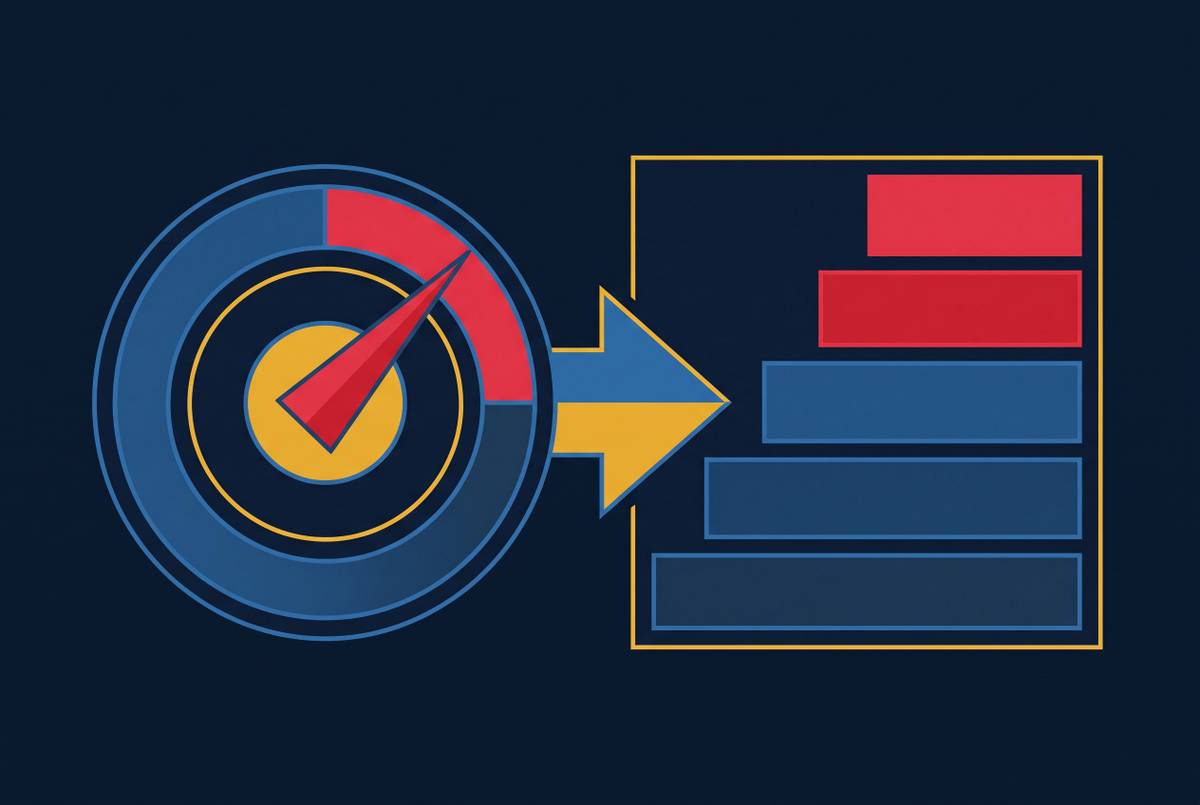
Both failure directions here are expensive. Over-provisioning wastes capital and drives up energy consumption for every unit of compute delivered. Under-provisioning runs a facility into a constraint that causes downtime or forces a retrofit nobody budgeted for. Both outcomes trace back to the same incomplete baseline. Strategic capacity planning has to integrate with asset management and operational intelligence platforms because power, cooling, space, and connectivity are not separate problems. A gap in the asset record doesn't stay contained to one dimension. It propagates across all four at once.
Structured asset data flow from design through handoff
Making planning numbers trustworthy starts well before a building opens. Asset data needs to be established as a shared schema from the earliest design stage, not assembled after the fact once the building is already running.
That starts with the handoff between BIM and DCIM. It needs explicit schema alignment and a shared asset identifier strategy defined before construction even begins. When that definition gets left until after commissioning, the integration team discovers the model was built to satisfy architect deliverable requirements rather than operator needs, and has to rebuild large parts of it from scratch.
Design-to-as-built reconciliation needs to be a formal workflow with defined acceptance criteria, not an informal walkthrough tacked onto project closeout. Defined acceptance criteria give the handoff a verifiable standard that a BIM model alone doesn't provide. Equipment data pulled from manufacturer specifications, things like power draw, thermal output, physical dimensions, connector types, should flow directly into design models, schedules, and validation rules. It shouldn't get manually retyped at every stage of the project. Data trapped in a PDF is intelligence going to waste, because it forces re-entry and introduces transcription errors at every point it crosses.
Operations teams need more than as-built drawings to run a facility safely. They need validated alarm logic, documented reasoning behind alert thresholds, trend baselines, and a clear picture of who's responsible for what. All of that depends on the asset record being complete and structured at the point of handoff, not pieced back together from commissioning notes weeks later. This kind of coordinated delivery is where a connected project platform earns its place: software that keeps design data, procurement data, and field changes tied to the same asset schema from day one, so the handoff package isn't assembled from scratch at the end.
When asset management platforms connect directly with procurement, maintenance, and security systems, they close a loop that manual registers leave open. The record ends up reflecting what was actually ordered, installed, and is currently running, not just what the design intended back when the drawings were frozen. Federal programs that plan DCIM and liquid cooling integration at the design stage, rather than bolting it on later, avoid the retrofit costs, the security review cycles, and the operational gaps that come with adding monitoring capability after the fact. That lesson holds just as well for enterprise and colocation projects.
Connected asset data and DCIM, EPMS, and BMS capability
DCIM, EPMS, and BMS only deliver what they're built to deliver when the asset data running through them is structured, complete, and kept current. The integration layer connecting these three systems is never more reliable than the shared schema sitting underneath it.
BMS handles cooling and building systems. EPMS monitors electrical infrastructure. DCIM provides modeling and insight across both. A power event can turn into a thermal event within minutes, and coordinating a response across all three systems depends on a shared data layer that knows what assets exist, where they physically sit, and what they draw. Newer platforms can coordinate EPMS, DCIM, and intelligent PDU data together to enforce power caps at the rack and outlet level, prioritize critical workloads, and shed nonessential load during a constraint. That coordination requires outlet-level asset records behind it. Without them, the enforcement logic has no reliable map of what's actually plugged in where.
DCIM doesn't replace BMS or EPMS. It sits on top of both of them. If the integration layer connecting them is missing or poorly specified, operators lose analytical visibility but keep operational control, and that creates a blind spot no amount of modeling can fix afterward. Integration platforms that connect capacity planning with asset management and operational intelligence systems count as a core piece of strategic capacity planning for exactly this reason: forecasting depends on real-time asset data from the operational layer, and the two can't be separated without weakening both.
Technologies like RFID, BLE, barcode scanning, and IoT sensors are what make this sustainable day to day. They replace manual, spreadsheet-based audits with continuous, automated record-keeping. The practical effect is that the asset register stays synchronized with physical reality instead of drifting between periodic reconciliation cycles. That continuous synchronization is what makes DCIM analytics trustworthy over time, rather than accurate only in the narrow window right after a fresh audit closes.
Governance practices that keep asset records accurate as facilities change
Structured asset data doesn't stay accurate on its own. The governance built around change events shapes whether a record holds up over years of operation or drifts back toward the same fragmentation described earlier in this piece.
Organizations need asset management platforms that support hierarchical tracking, version control, and real-time updates, and version control matters here specifically as a change-governance tool, not just a historical archive. It's what stops a field substitution, a swapped PDU, a relocated server, a replaced cooling unit, from silently overwriting the record without a trace. Every change needs an owner, a timestamp, and a path back into the schema that procurement, maintenance, and monitoring systems all read from. A facility that treats its asset record as a living system, updated at the moment something changes rather than reconciled months later, is a facility whose capacity planning numbers can actually be trusted. The growing data center asset management market, expected to nearly triple in size over the next decade or so, reflects how much of the industry has already recognized this. The tools exist. Using them well requires discipline.
Sources
- Data Center Asset Management Market Report, 2026-2033
- Apparatus and method for capacity planning for data center server consolidation and workload reassignment
- Data aggregation and reporting environment for data center infrastructure management
- A human-centered approach to reframing job satisfaction in the BIM-enabled construction industry
- Data center agent for data center infrastructure monitoring data access and translation
- Determining asset associations for data center customers
- Associating infrastructure assets in a data center