Power Purchase Agreement Structures for Data Center Operators
Data center operators must choose between physical, virtual, and behind-the-meter PPA structures.
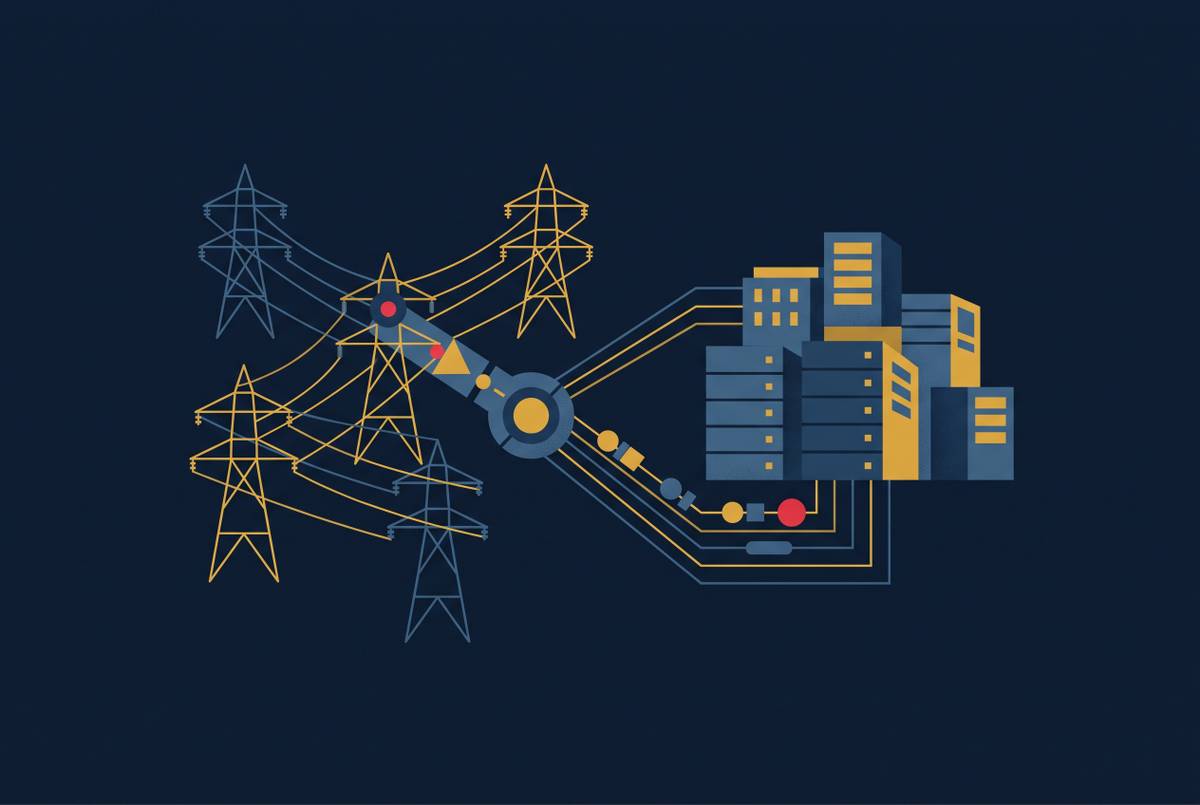
Data centers now eat up roughly 4.5% of US electricity, and that number is headed toward somewhere between 9% and 17% of total generation by 2030. AI is the reason. Data center electricity use jumped 17% in 2025 alone, and by 2030, AI facilities alone are projected to pull 945 TWh a year. At that scale, calling the utility and asking for a hookup stops being a plan. Power procurement decides whether a project gets built at all, rather than being a line item someone handles after the site gets picked.
The power purchase agreement is the main tool operators use to lock down that access, and treating it as one product is the first mistake most teams make. A PPA is a category, not a single thing. The structure picked inside that category, physical, virtual, behind-the-meter, or some blend, decides how risk gets carried over a contract that can run 20 years. Get the structure wrong and the mistake doesn't stay small. It compounds every year the contract runs.
What a PPA does and does not do
Strip it down to basics: a PPA is a long-term contract where a buyer agrees to purchase power, or the renewable attributes tied to that power, from a generator at a set price. Terms typically run for many years, often a decade or more.
Done right, a PPA gives three things. It locks in a price so the buyer isn't riding spot-market swings for two decades. It gives the generator a signed contract to take to lenders, which often decides whether a wind farm gets built at all or stays a slide deck. And it lets the buyer claim renewable energy certificates, or their equivalent, for Scope 2 emissions reporting.
Most buyers get this backwards: in most offsite deals, the electrons from that specific wind farm or solar array never reach the specific data center. In most offsite deals, the electrons from that specific wind farm or solar array never reach the specific data center. Power goes into the grid, mixes with everything else on it, and what comes out the other end at the facility is just grid power, whatever mix that grid happens to be running that hour. A PPA doesn't grant grid access either. It doesn't push a project ahead in an interconnection queue, and it doesn't erase basis risk, the gap between prices at the generator's location and prices at the load node where the facility actually sits. A signed PPA is not a guarantee of clean power arriving at the substation. Buyers who read it that way are misreading the contract, plain and simple.
Pricing follows one of three paths: fixed for the full term, fixed with scheduled step-ups, or indexed to wholesale prices. Each shifts risk in a different direction, and neither side gets to have it both ways.
Physical PPAs: when the electrons travel to the facility
Physical delivery comes in two forms, and they carry very different economics.
Private wire, sometimes called direct connect, puts generation right next to the facility or wires it in directly, bypassing the public grid. Because there's no grid to pay for, private wire deals post the strongest unit economics on the market. Wheeling fees and grid charges never enter the picture. If the site and the generator can sit close enough together, this is the structure to reach for first.
Sleeved PPAs work differently. The generator and the offtaker are still tied together, but the local utility sits in the middle, bundling the renewable output with regular delivered power and charging a fee for the service. If the wind doesn't blow or the sun doesn't shine enough to cover the contract, the utility fills the gap with ordinary grid power.
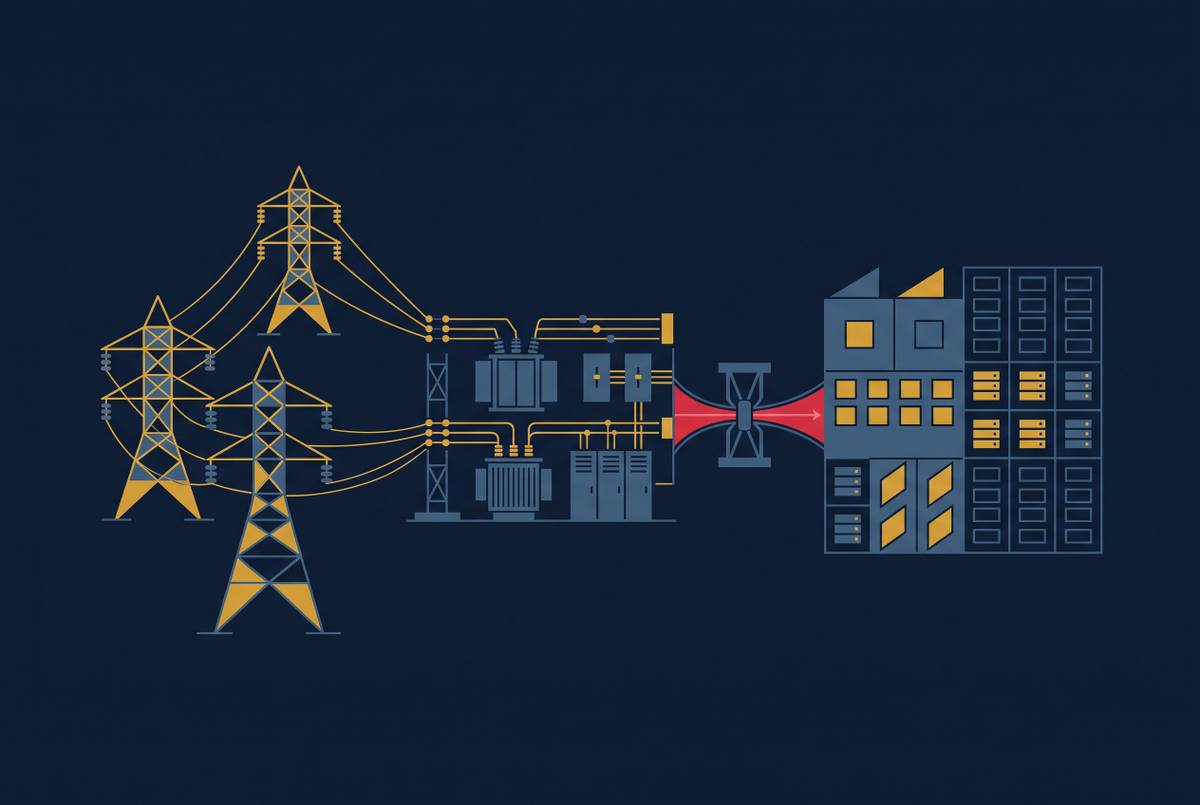
Physical delivery gives a cleaner story for renewable energy claims, and it lines up with where the GHG Protocol is heading: tighter Scope 2 accounting that wants deliverability, not just paper certificates. Availability is the catch. Regulated electricity markets often don't allow physical PPAs at all, which leaves sleeved structures as the only physical route on the table. Any physical deal also means sitting down with the grid operator early, because interconnection costs on these projects can run high enough to reshape the whole deal if nobody scopes them up front.
Virtual PPAs: financial settlement without physical delivery
A virtual power purchase agreement skips physical delivery. The generator sells its power into the wholesale market like anyone else. The offtaker and the generator then settle up based on an agreed strike price against the actual spot price, a contract-for-differences arrangement. The offtaker still gets RECs for its sustainability reporting, but it never takes a single electron from that generator.
This is why VPPAs became the default for hyperscale buyers. Geography stops being a constraint: a company can back a solar project in one region to cover a data center somewhere else. There's no interconnection burden sitting on the buyer's side, and a virtual PPA portfolio scales across countries with far less friction than physical deals allow. Microsoft's virtual PPA program spans operations in 13 countries.
The risk sits in two places, and both deserve more attention than they usually get. Basis risk appears when the generator's settlement hub and the buyer's load node drift apart in price, turning what looked like a clean hedge into a real loss. Floating or partially indexed VPPAs pass wholesale volatility straight back to the buyer whenever the market turns down. And proposed changes to the GHG Protocol's Scope 2 rules may push toward hourly matching instead of annual certificate retirement, a bar an annual virtual PPA simply isn't built to clear. That last point alone should make any buyer think twice before signing a 20-year annual-matching long-term clean power contract today.
Behind-the-meter generation and energy parks as a response to interconnection failure
Grid congestion and queue delays are stalling projects across the board. Getting one through often means clearing federal regulators, a regional grid operator, a state utility commission, and local authorities, each adding its own delay stacked on top of the last.
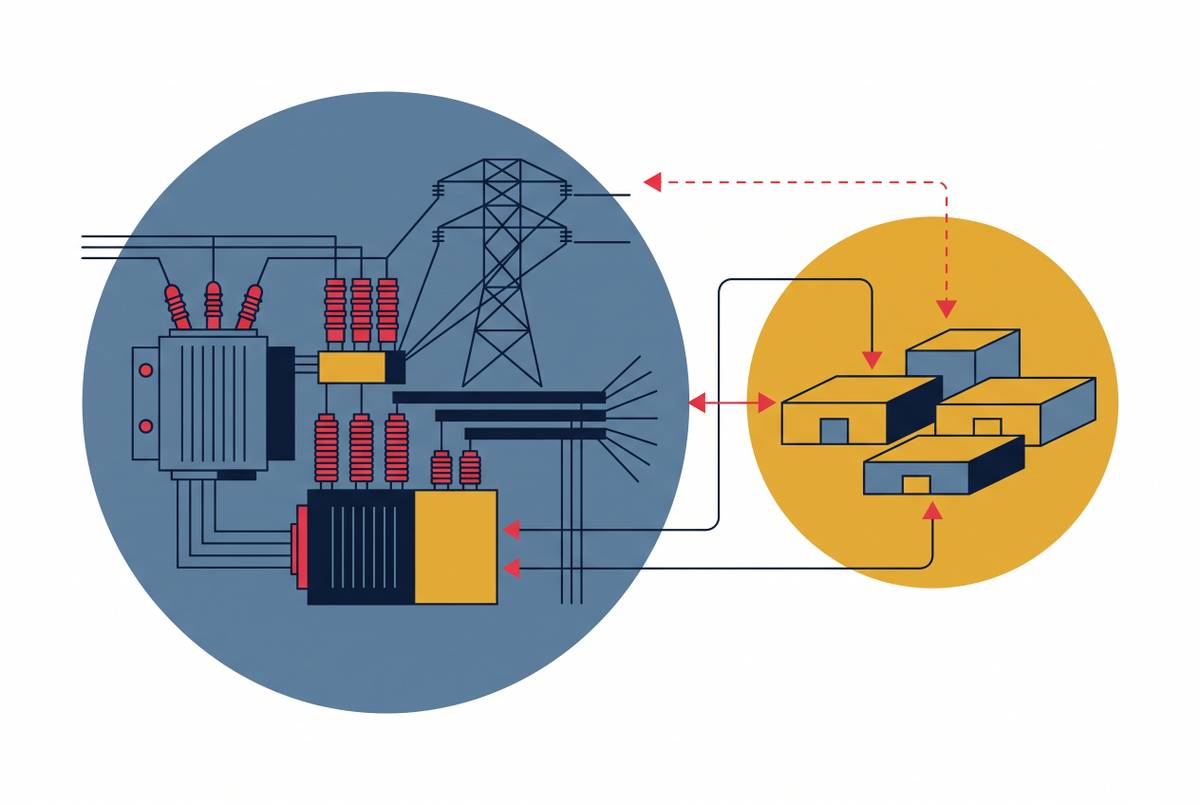
Behind-the-meter, or BTM, generation sidesteps a chunk of that. The operator installs or contracts for power resources on the customer side of the meter, cutting day-to-day dependence on the grid. Pairing that with battery storage smooths out the sharp power swings that high-density AI compute loads throw off, swings the grid alone can't absorb cleanly. BTM also allows phased buildout: generation capacity grows alongside construction instead of demanding full grid capacity from day one.
Energy parks and microgrids push the idea further, folding generation, storage, and load into one integrated site, sometimes capable of islanding off the grid completely when needed.
A policy shift is backing this trend too, and it's worth watching closely. "Bring your own power," Legislative proposals increasingly incentivize, or outright require, data center developers to bring dedicated generation instead of leaning on the existing grid, a shift visible in the growing use of "bring your own power," or BYOP. BTM structures are already built for exactly that world. Operators still counting on a straightforward utility interconnection are betting against where the policy is headed.
Hybrid structures and the 24/7 matching imperative
No single generation type covers 24/7 load on its own, and pretending otherwise is how buyers end up with a contract that looks green on paper and runs on gas at night. Solar peaks at midday. Wind runs strongest overnight and shifts by season. Data center load doesn't move at all, it just runs, hour after hour, every day of the year. Annual certificate matching papers over that mismatch without fixing it: a facility can claim to be fully renewable while pulling fossil power at 2 a.m.
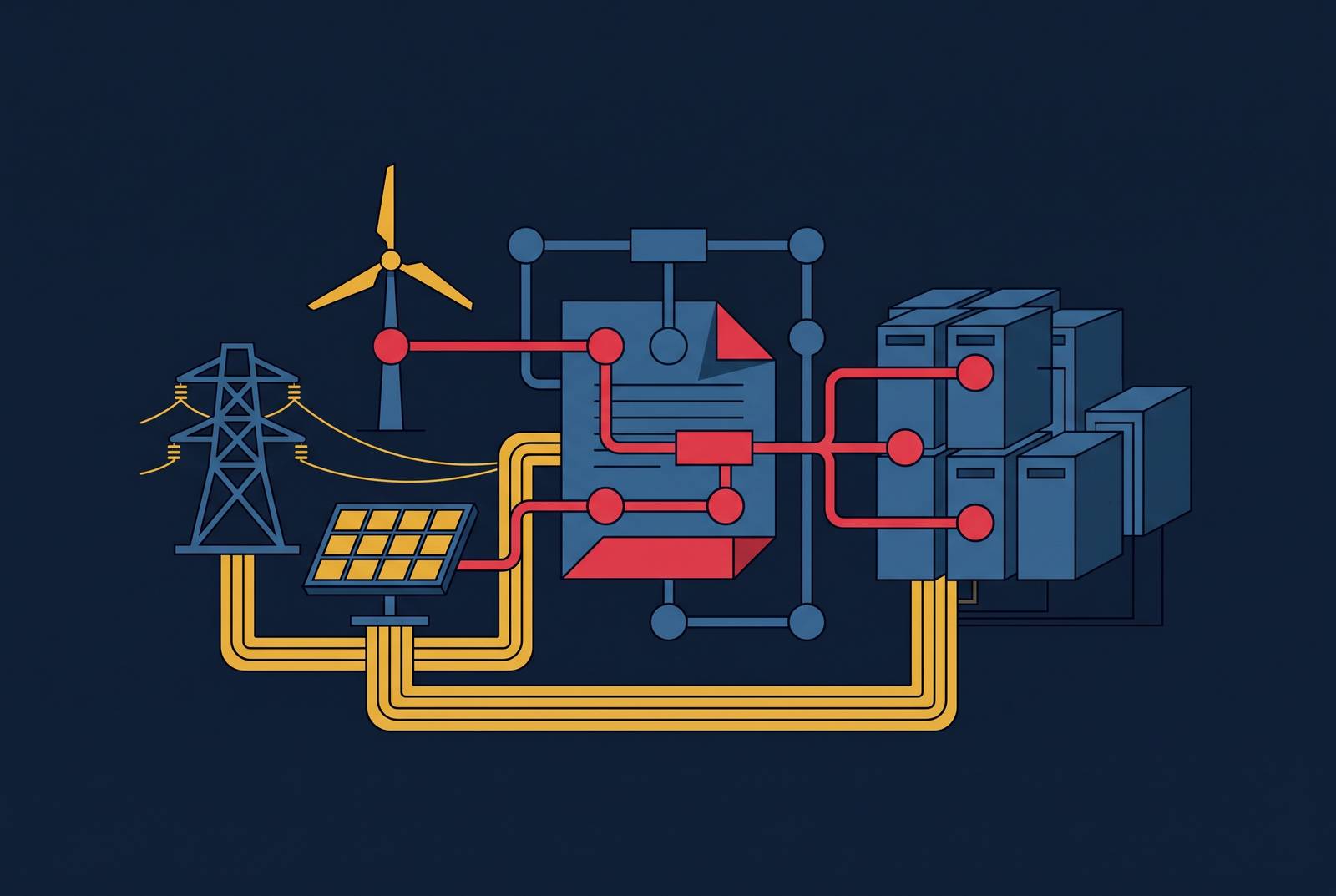
Hybrid portfolios are where serious operators are converging, and single-source contracts are increasingly a mistake. Pair baseload sources, nuclear, geothermal, hydro, with variable wind and solar, then fill the remaining gaps with storage. Amazon's approach shows portfolio thinking replacing single-contract thinking: 10 GW of wind, 5 GW of solar, and 2 GWh of storage, stacked together rather than bought one deal at a time. Battery storage itself is scaling fast, and it now functions as core reliability infrastructure for managing AI load swings.
Nuclear is the baseload piece pulling the most attention, for a simple reason: it runs continuously at scale, which nothing variable can match. 22 GW of nuclear projects are in development worldwide right now. Tech companies have put over $10 billion behind nuclear partnerships to lock that supply down, including Amazon's commitment to X-energy and Google's 1.8 GW deal with Elementl Power.
One thing looms over all of it. If the GHG Protocol's Scope 2 update lands on hourly matching, plenty of buyers holding annual VPPAs will find their contracts no longer count for what they were signed to prove. Some are already pausing procurement decisions until the final guidance lands. That pause is the rational move.
How counterparty structure and term length redistribute risk across the contract
Two counterparty models dominate this market. A developer PPA has the generator contracting with the data center developer, who then delivers energy as a service to tenants inside the lease, common in multitenant and colocation buildings. A tenant PPA cuts the developer out of that chain entirely: the generator contracts straight with a single large tenant, typical when a hyperscaler is the anchor or sole occupant and wants direct control over its own power sourcing.
Term length is its own trade-off, and longer is usually the smarter bet if the balance sheet can carry it. A 10-to-25-year term buys price certainty, backs project financing, and usually earns better pricing, since the generator can build against a committed offtake. A five-to-ten-year term costs a bit more but keeps flexibility open for shifts in technology or load that nobody can fully predict this far out. Bridge PPAs, short-term deals on assets already up and running, are increasingly how operators cover near-term renewable targets while longer projects work through development.
Pricing structure carries its own risk map. Fixed price gives total cost visibility but can turn into a bad bet if market prices fall over a 15-to-20-year stretch. Fixed with escalators blends certainty with some inflation protection. Floating or indexed pricing tracks the market: cheaper in good conditions, unpredictable in bad ones. Collar structures, with a floor and a ceiling, split the difference and manage downside for both sides.
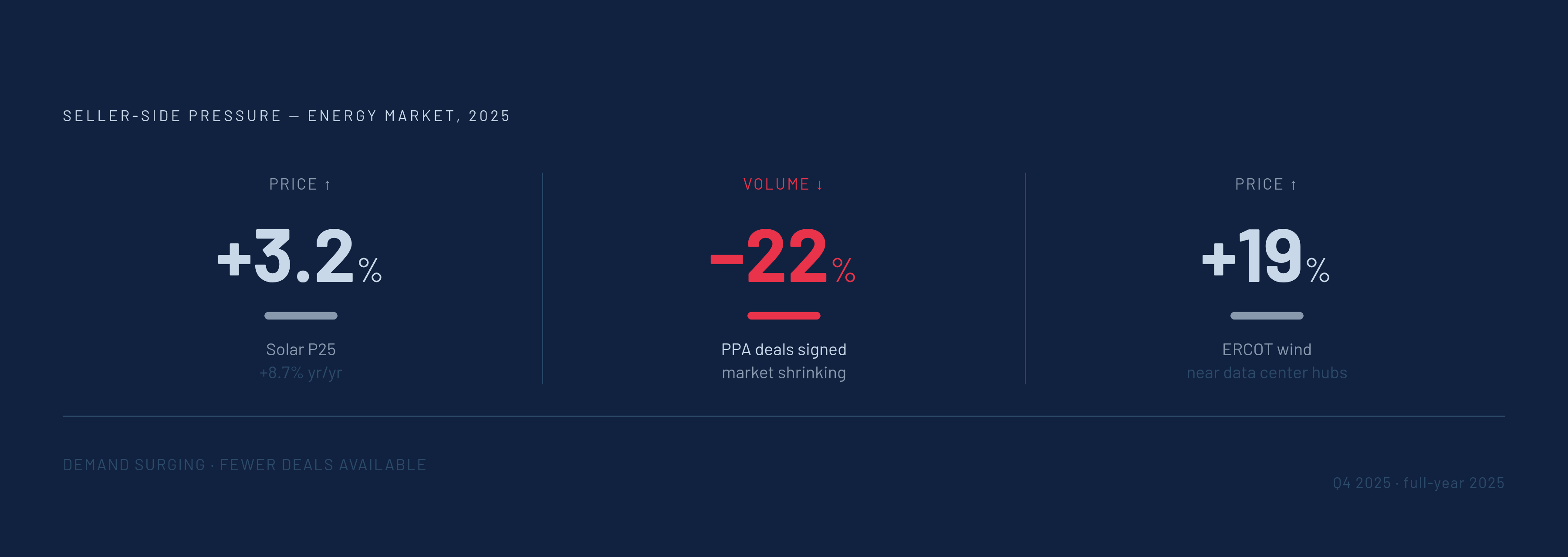
The market right now leans toward sellers, and buyers negotiating today are negotiating from the weaker side of the table, whether they've noticed or not. Solar P25 prices rose 3.2% in the fourth quarter of 2025, nearly 9% year-over-year. PPA volumes fell 22% across 2025 as policy uncertainty following the One Big Beautiful Bill Act shrank the pool of projects that could get financed. ERCOT wind prices jumped 19% amid tightening supply near data center hubs. None of that trend reverses on its own.
Regulatory and tax credit considerations that reshape deal economics
Federal tax credits are available for zero-emissions technologies and energy storage systems involved in these deals. Those credits shape what a generator can afford to charge, and that number flows straight into PPA pricing.
The credit system now splits into two tracks. Legacy credits cover projects that started construction before 2025. Technology-neutral credits apply after that and open eligibility to a wider set of sources, nuclear included. The One Big Beautiful Bill Act layered new restrictions on top of both tracks that developers are still working through.
Foreign Entity of Concern, or FEOC, rules add another layer that can affect a project's credit eligibility entirely, which makes FEOC compliance a front-line diligence item, not something to check late in the process. Tariffs and the Section 232 investigations pile direct costs onto development, and combined with new federal permitting steps, they've slowed projects down at exactly the moment demand is accelerating.
None of this sits still. The rules, the credits, and the market shift year to year, and a PPA signed today has to survive changes nobody can fully see coming. That's the real work behind choosing a structure: not matching it to today's load profile, but building something that holds up under 15 or 20 years of regulatory and market drift.
Sources
- Power Purchase Agreements (PPAs) for AI Data Centers
- AI datacenters rewrite the solar PPA playbook - pv magazine USA
- Powering Data Centers: Energy Strategy and Structuring for a Constrained Grid
- Everything data center operators need to know about Power Purchase Agreements (PPAs) - DCD
- Power Purchase and Interconnection Agreements for Data Centers
- Powering Data Centers
- Why Data Centers are Moving Beyond Renewable Energy PPAs
- pv-tech.org