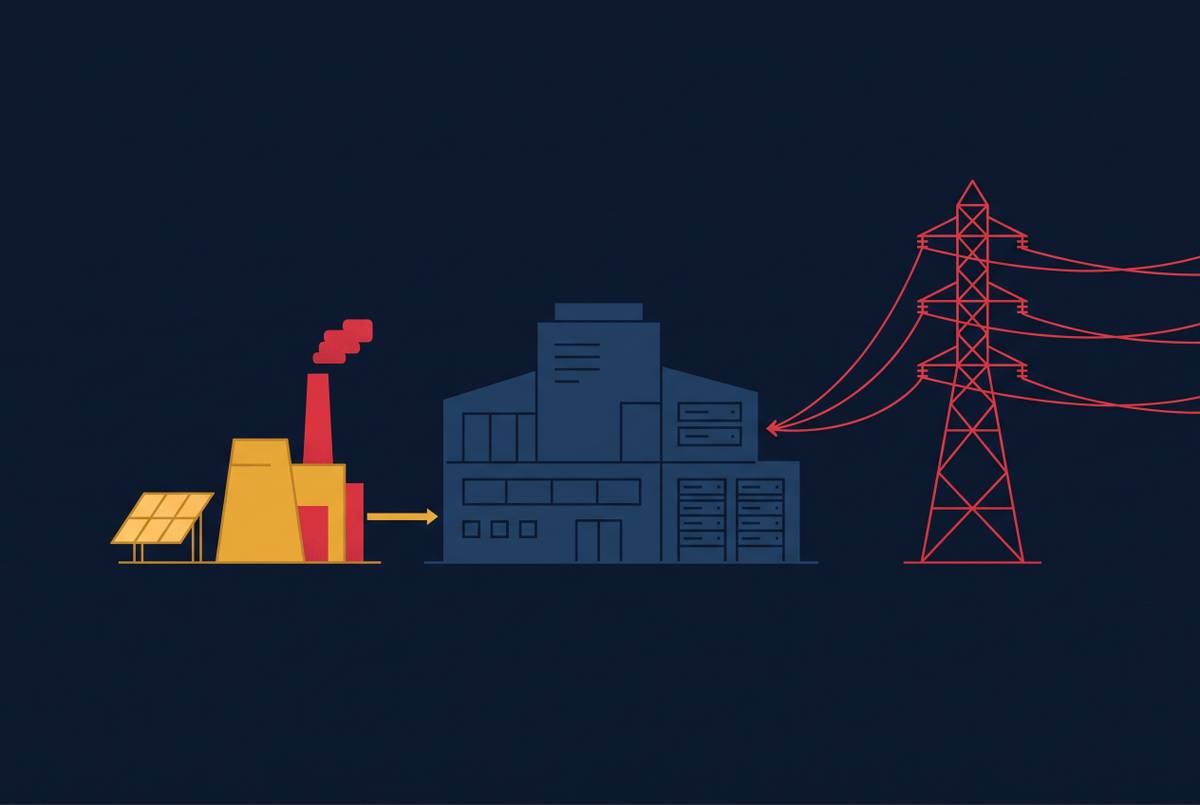
Grid Capacity Constraints in Northern Virginia and Their Portfolio Consequences
Power shortages now determine which data center projects get built and when they launch.
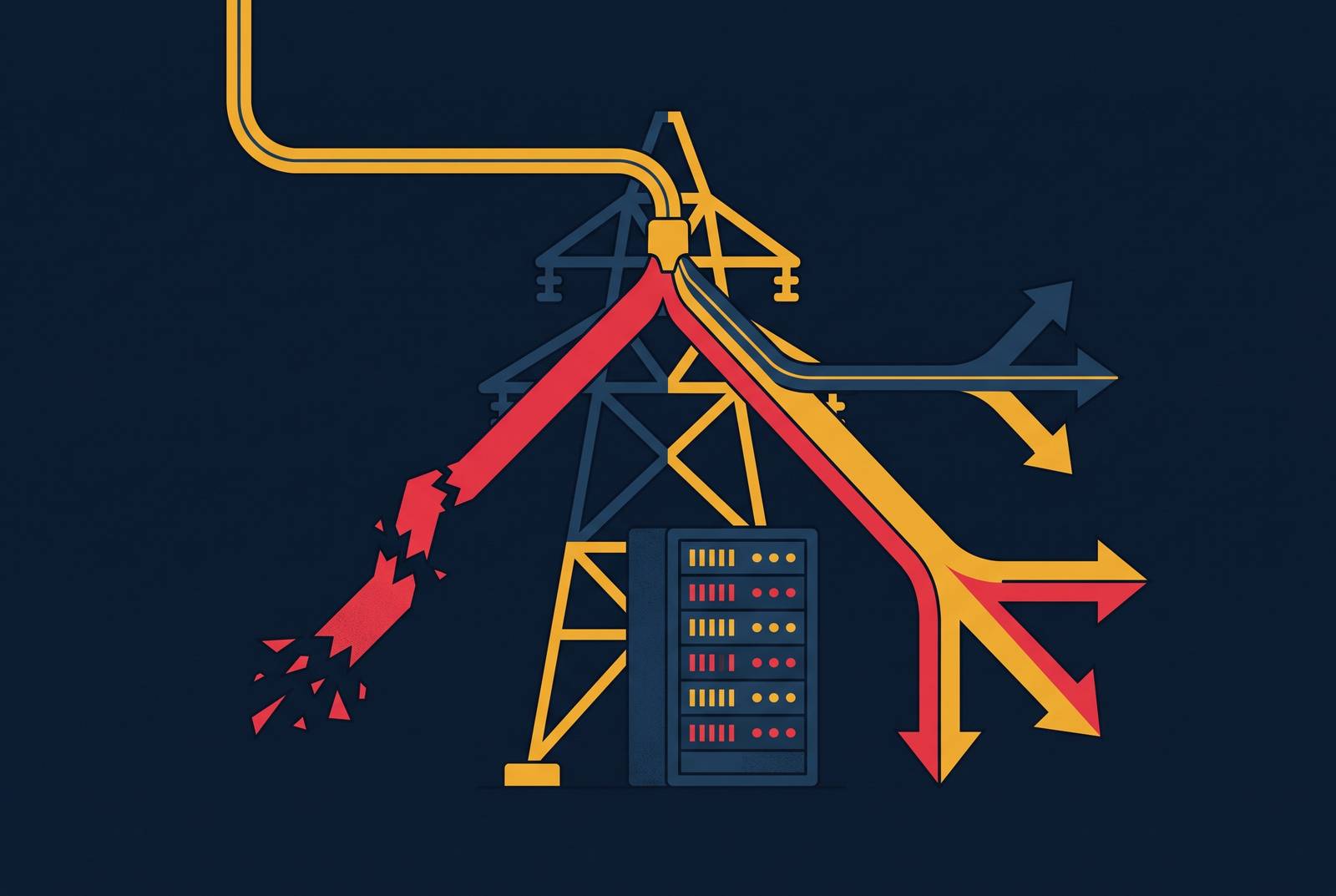
The interconnection queue's role in turning power availability into a years-long variable
Northern Virginia carries about 70 percent of global internet traffic through its data centers, and the region is set to see substantial capacity growth in 2026, continuing a rapid expansion from recent years. That growth finally outran the one thing it depends on. Power availability, not land, not capital, not permitting, decides which projects get built, when they get built, and whether a portfolio hits its numbers. This piece traces how that shift happened, what it costs delivery teams that weren't built for it, and what a workflow that actually respects the constraint looks like.
Virginia hosts close to 650 data centers. Loudoun County alone runs 199 today, with another 117 somewhere in the pipeline. Data centers accounted for 24 percent of Dominion's electricity sales in Virginia in 2023, a share that has continued to grow, and that share is projected to keep rising substantially in the years ahead. No grid was built to handle that pace and scale of load growth, so the strain appears first in Dominion Energy's interconnection queue.
Dominion's interconnection queue already stretches years into the future, with scores of projects cleared and hundreds more waiting behind them. The aggregate requested load across those projects reaches a staggering total, a number that makes most prior infrastructure bottlenecks look small.
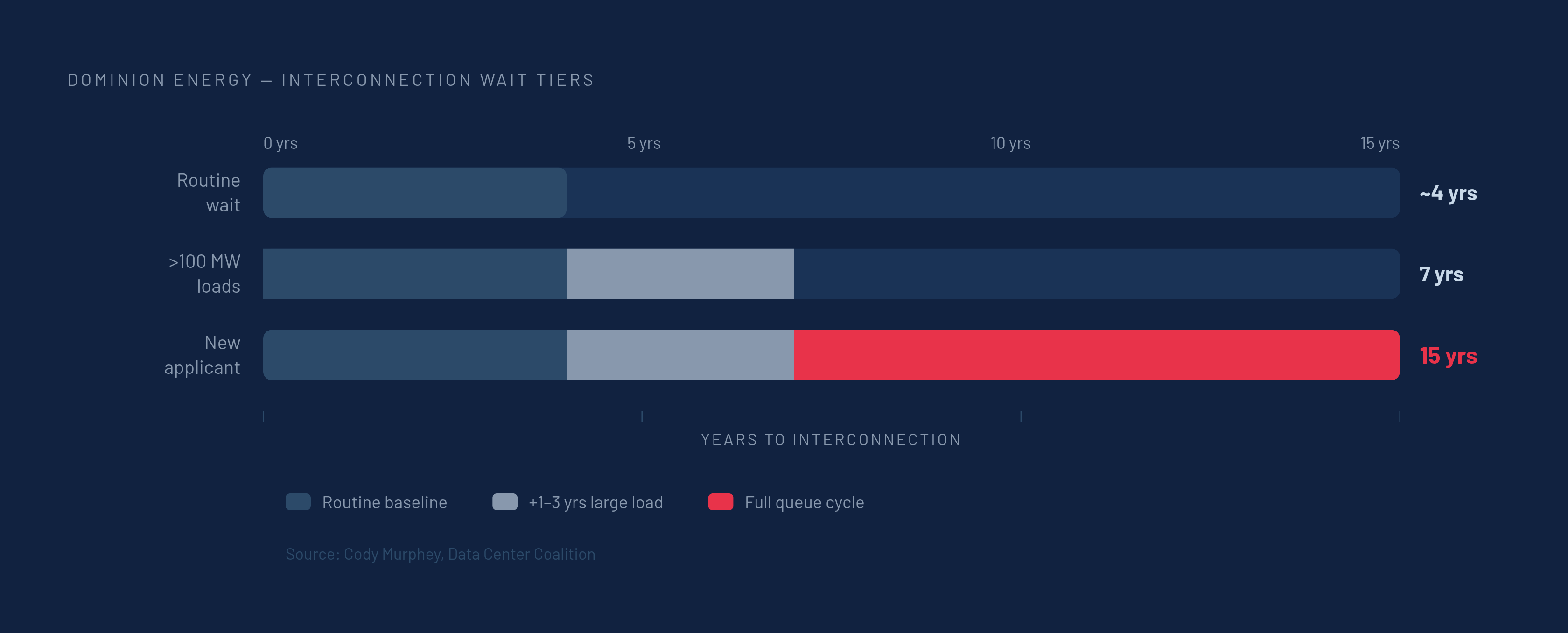
Wait times are stretching to match. Dominion expects large loads, anything above 100 MW, to see delays grow by one to three years on top of what's already routine, pushing some timelines out to seven years total. Some industry observers have warned that queue timelines could extend well beyond a decade for new applicants. Cody Murphey of the Data Center Coalition put a similar marker down, warning the queue could take up to 15 years to fully cycle through. A queue position is a strategic asset now, something to fight over, hedge against, and price into every deal.
PJM's May 2026 Cycle 1 queue shows the same scale problem from a different angle. It drew 811 separate applications requesting a combined 220 GW, more than PJM's entire existing generation fleet. A significant portion of that requested capacity was tied to natural gas generation. The rest fed a category PJM now tracks on its own: large load, meaning data centers big enough to behave like power plants in their own right.
What the capacity slip tells portfolio owners about 2026 delivery risk
Queue delays become delivery delays, and the math is already ugly. Of the new power capacity supposed to come online in 2026, only a fraction has broken ground. Most of what's left won't make it: analysts expect 30 to 50 percent of the remainder to slip into 2027 or later.
Construction tells the same story from the build side. A large share of the data center capacity scheduled to come online in 2026 faces delays or cancellation, driven by permitting bottlenecks, grid shortfalls, and fights over who pays for new transmission and generation. Dominion has signed contracts for 51 GW of power commitments, with another 20 GW or more waiting in the queue behind that. A signed contract for power is not power that shows up on schedule. Portfolio owners treating those as the same thing are the ones getting burned right now.
Cost is following capacity into the danger zone. PJM's July 2025 capacity auction cleared the Dominion zone at $444.26 per MW-day. PJM's own Independent Market Monitor pinned roughly $16.6 billion in combined capacity market revenue increases across two auctions directly on data center load. That number carries concrete weight in auction clearing prices and portfolio costs across the region. It's formalized in auction clearing prices, and every portfolio owner in the region pays for it whether their project caused it or not.
Geographic spillover's effect on site selection and design complexity
Loudoun County ended by-right approvals for data centers in March 2025. Development didn't stop. Development moved to Prince William, Culpeper, Stafford, and a handful of other outer counties, which are now absorbing the overflow, with more than 29 GW planned or live outside Loudoun's borders. Prince William, Culpeper, Stafford, and a handful of other outer counties are now absorbing the overflow, with substantial capacity planned or already live outside Loudoun's borders.
Every site still needs the same short list of hard-to-find ingredients: proximity to high-voltage transmission, water and sewer capacity, and zoning that won't take three years to clear. Those ingredients are scarce everywhere this growth spreads, Loudoun included. iMasons' State of the Digital Infrastructure Industry 2026 Annual Report, drawing on input from 2,000 industry members globally, names access to power as the single biggest factor in site selection for large AI deployments, ranking it above regulatory environment, capital stability, and connectivity.
Some of that pressure is jumping state lines now. ERCOT's large-load interconnection queue hit about 410 GW as of April 2026, and data centers make up roughly 73 percent of that pipeline. One gigawatt-scale Texas project has more than 7,000 construction workers on-site daily, the scale Virginia's constraint is exporting to its neighbors. That's the scale Virginia's constraint is exporting to its neighbors.
Power, cooling, and cable coordination failures now carry portfolio-level consequences
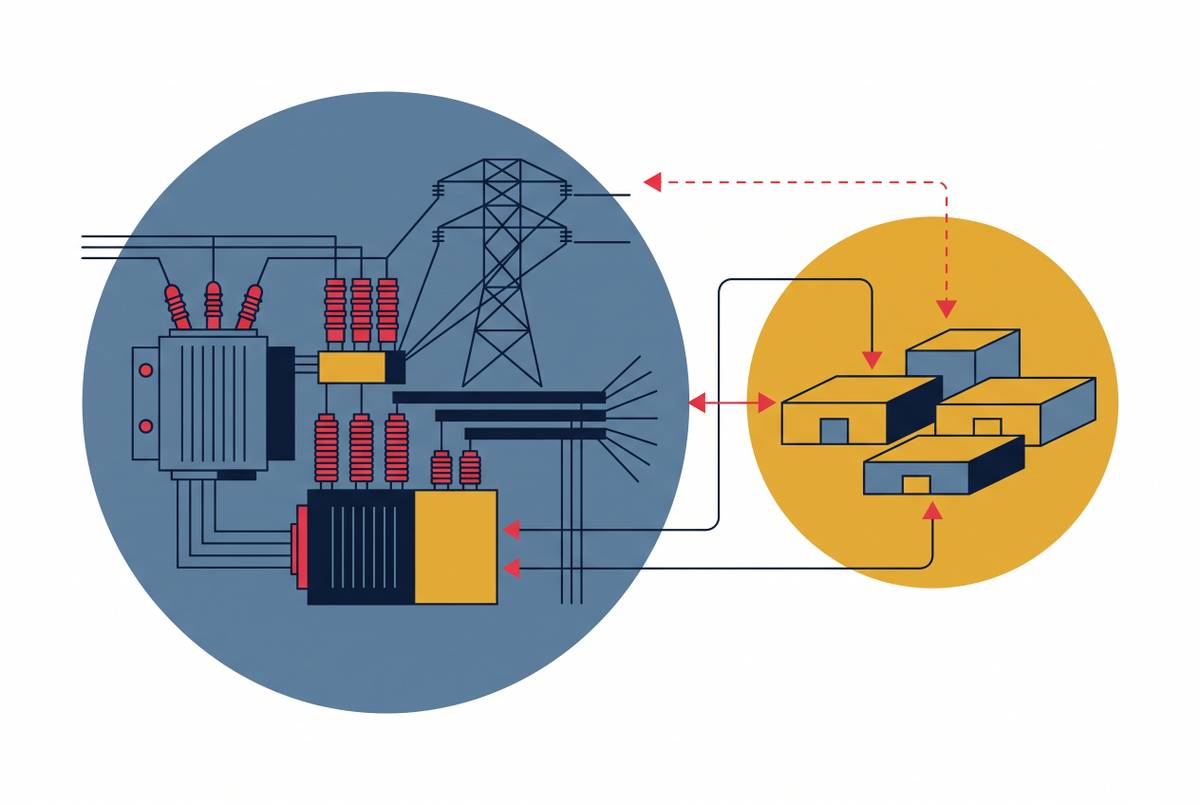
Electrical systems consume a dominant share of a data center's total budget, and substations, switchgear, and interconnection work carry the longest lead times and the fattest contingency line in the whole project. Industry analysis has consistently found that facilities pulling hundreds of megawatts get scrutinized like power plants now, not buildings. Engineering scope has to cover how the facility behaves as a grid asset once it's inside the fence line.
Cooling changed just as fast. AI workloads pushed chilled water loops, stainless steel piping, and structural systems built for far heavier loads into the baseline spec. Cooling installation runs on the same schedule as power work, often through the same physical space, so a sequencing error between the two trades drives cost fast. It's a rework trigger, plain and simple.
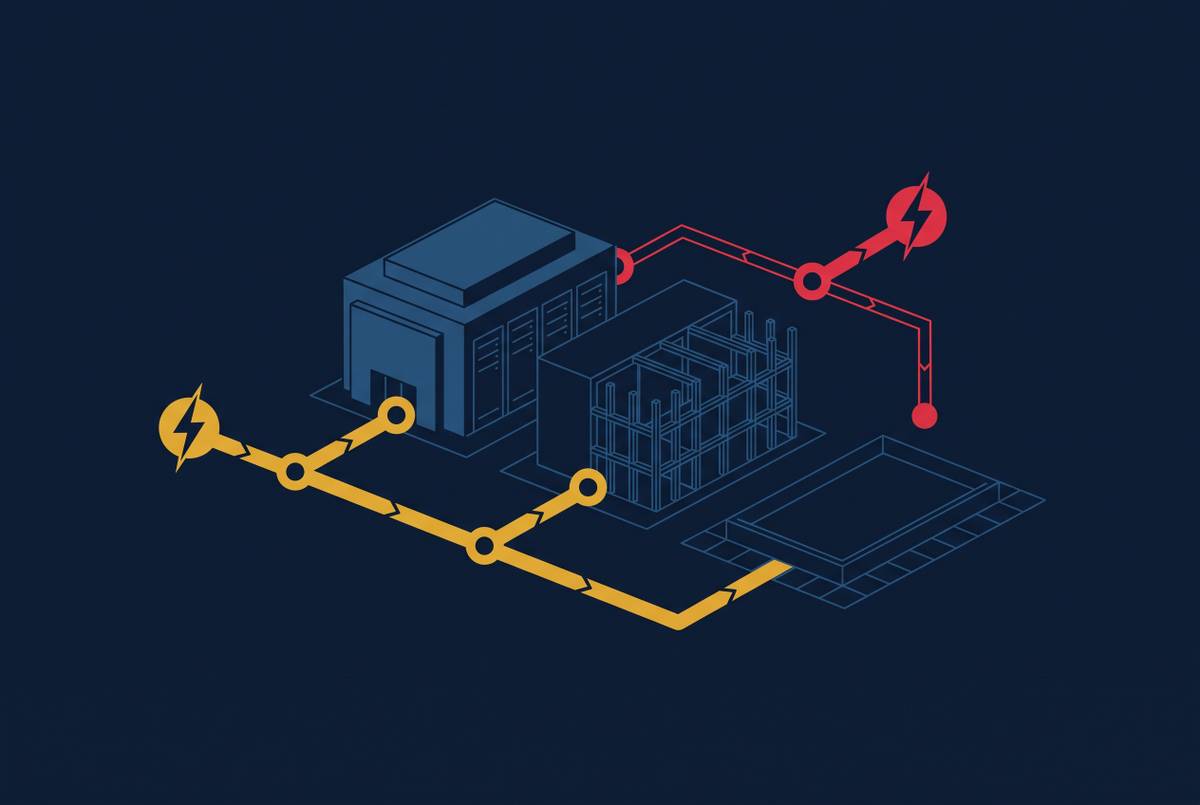
Cable tray, fiber runs, and MEP services collide in the same tight corridors, and that's where field conflicts pile up. On a constrained timeline, one coordination miss there never stays contained. It ripples into power path rework, cooling piping changes, and structural support all at once, because those systems were never actually separate to begin with.
What fragmented delivery workflows cost when power is the governing constraint
The same pattern appears in nearly every project. The same rack, the same power path, the same cable route gets typed by hand into a layout tool, then again into an electrical model, then again into coordination drawings, then again into specs, then again into whatever system operations ends up using. Every retype is a chance to get something wrong, and every mismatch becomes rework somebody catches later, usually too late to matter.
Take something as plain as moving a rack in a constrained Loudoun project. On paper, it's a layout change. In practice, it forces recalculation of the power path, redistribution of cooling load, rerouting of cable trays, a check on structural loading, and a fresh round of sheet updates. When those systems aren't connected, that cascade happens by hand, and it eats hours a delayed grid connection already made scarce.
Modular and prefabricated construction was supposed to fix compressed timelines once grid approval finally lands. That only holds if the BIM data feeding the factory is fabrication-ready and standardized from the start. Inconsistent modeling standards or uncoordinated geometry kill the prefab advantage right at the point of manufacture, which is exactly the point where nobody has time left to fix it.
There's a real payoff on the other side of getting this right. A 2025 Nature Energy study found that software-based workload orchestration can cut cluster power use by 25 percent during peak demand periods while still holding AI quality of service guarantees. That kind of operational intelligence, the kind that unlocks demand-response participation and the regulatory fast-tracking that comes with it, depends on clean, structured data moving from design through commissioning without getting garbled along the way.
BIM data that doesn't reach operations is a handoff failure, not a documentation gap
Building management systems, electrical power management systems, and data center infrastructure management platforms each do one specific job, and none of them covers for the others. BMS runs facility-level HVAC and environmental controls. EPMS handles electrical distribution and power quality down to the individual breaker. DCIM pulls IT and facility data together for capacity intelligence across the whole portfolio. All three need structured asset data arriving from design and construction fully intact, not rebuilt after the fact.
When those systems don't talk to each other, blind spots open up and decisions slow down. Demand-response participation, the exact capability a federal energy directive flagged as a path to faster interconnection approval, gets a lot harder to pull off as a result.
Greenergy Data Centers in Estonia shows what the fix actually requires. The company deployed an integrated BMS-EPMS platform built on Siemens Desigo CC and Power Manager, achieving unified visibility across HV/MV, LV, and UPS systems. The precondition for that wasn't a clever retrofit of messy historical records. Structured data came directly out of the facility's electrical design, from day one.
When BIM data hits turnover incomplete, equipment parameters missing, cable routing untracked, power paths undocumented, the operators running DCIM, EPMS, and BMS spend the first months of a facility's life rebuilding information the design team already had. In a market where the next campus phase is already sitting in the interconnection queue, that lost time carries a direct capacity cost.
A connected design and delivery workflow that respects power as the constraint
The fix is a single connected model, one where moving a rack automatically triggers recalculation of power paths, cooling load, cable routing, and structural checks, instead of a chain of manual handoffs between tools that don't know about each other.
AI and deterministic rules do different jobs here, and neither one substitutes for the other. AI speeds up layout generation, drafts RFI responses, and pulls spec data out of manufacturer PDFs. Deterministic rules enforce separation requirements, redundancy configurations, bend radii, clearance distances, and protection coordination. Precision and code compliance are not tasks to hand a probabilistic model, and teams that blur that line end up re-checking AI output by hand anyway, which defeats the point.
Getting structured data into DCIM, EPMS, and BMS has to be the finish line built into the process, not an afterthought bolted on at handover. Equipment parameters, power paths, cable routes, and asset IDs need to stay traceable from the original design decision all the way through commissioning and into the operational systems that run the facility for years afterward. Every RFI answer, every design change, should carry that information forward with it.
Modular construction only pays off if the models meet fabrication-ready geometry standards before a module leaves the factory floor. That has to be a rule the design platform enforces on its own, not something someone checks for by hand after the fact.
The portfolio decision that the grid constraint is forcing
The grid isn't getting fixed on any near-term timeline. Dominion's capital plan has grown to around $65 billion through 2030, and the Golden to Mars 500/230 kV transmission line isn't targeted for completion until 2028. Relief is coming, but it sits years out, and the interconnection queue stays the governing variable for all that time in between.
Given that, the decision that actually matters for a portfolio is how fast a team can take a power-approved site and turn it into a commissioned, operating facility. The gap between grid approval and the next capacity review cycle is fixed and finite, no matter how much capital sits behind the project.
The hyperscalers are betting accordingly. Amazon, Microsoft, Google, and Meta together spent more than $200 billion in capital expenditures in 2024, a 62 percent jump year over year. That kind of spending only makes sense if delivery speed, not site selection, is where the competition actually gets decided. The grid picked the constraint. Speed of execution against it is the only lever left to pull.
Sources
- AI, Data Centers, and the U.S. Electric Grid: A Watershed Moment
- Data center growth could outpace power generation - Virginia Business
- Dateline Ashburn: Data Centers Drive New Energy Disputes in Northern Virginia
- The Next Data Center Hotspots: Where Construction Is Heading in 2026
- PJM Interconnection AI Energy 2026, 32 GW Demand, Dominion
- The 220-GW Grid Queue Is Datacentres' New Bottleneck
- enkiai.com
- Northern Virginia Is Running Out of Power | Troview Intelligence