Hyperscaler Pre-Leasing and Its Effect on Available Market Supply
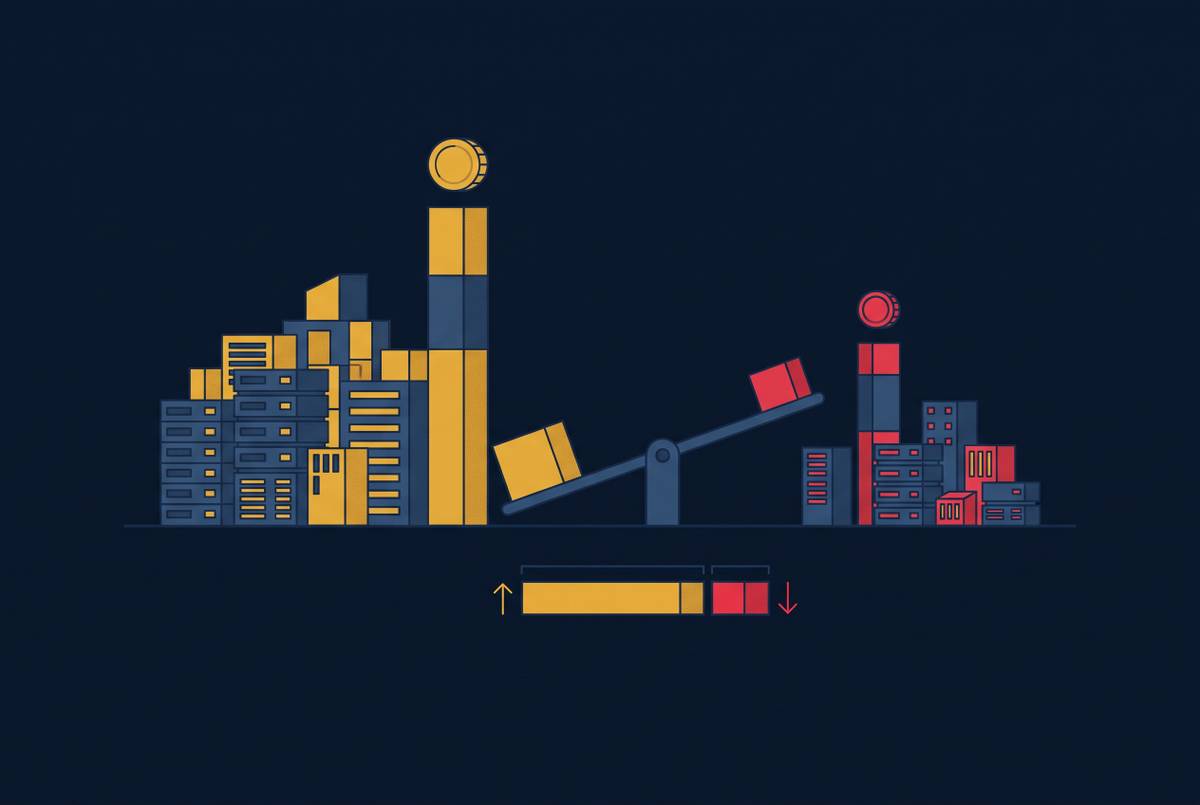
Hyperscalers are locking up data center capacity years before buildings exist.
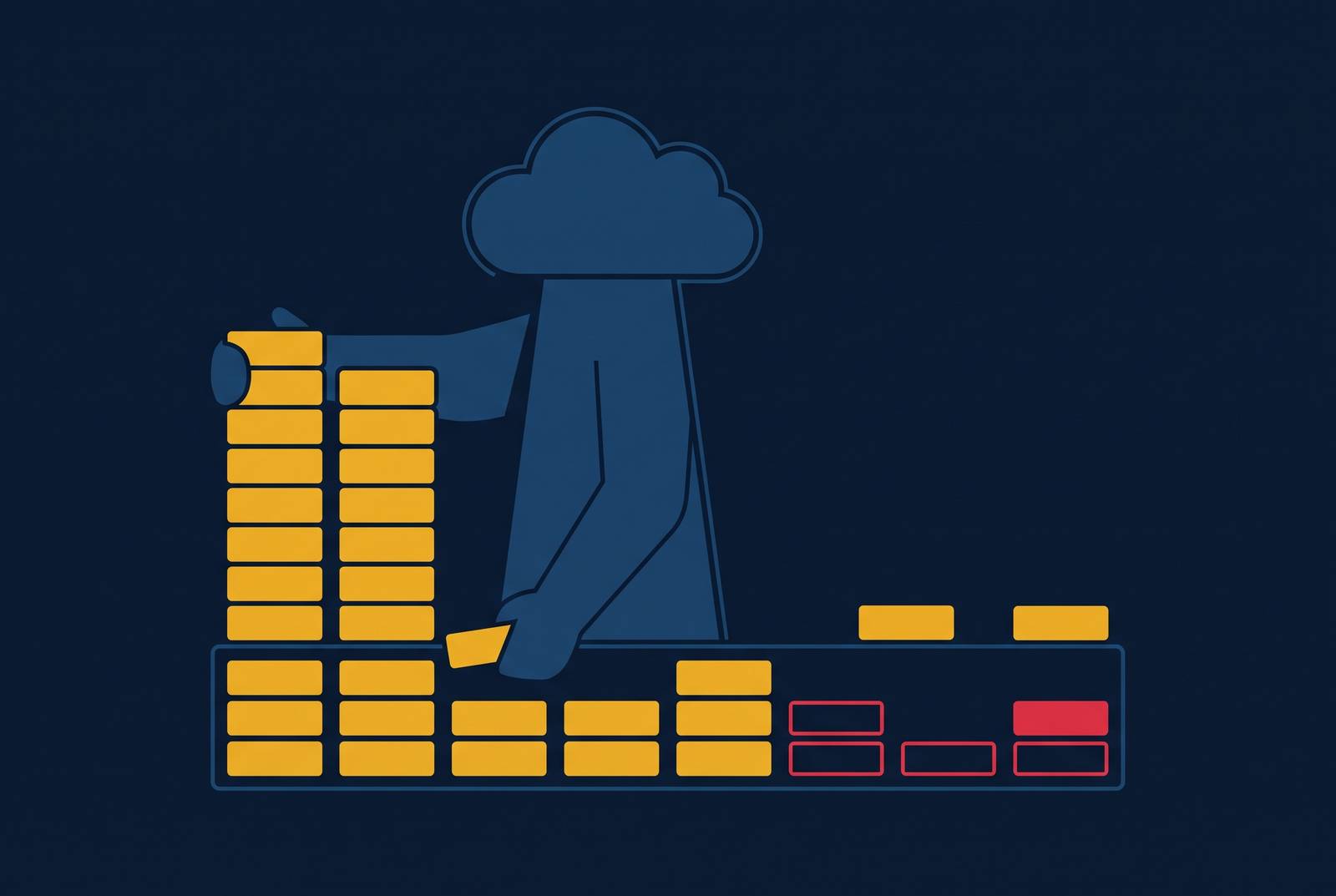
Pre-leasing used to be a hedge. A hyperscaler would sign early on a handful of buildings to lock in a good location or a favorable rate, and the rest of the market kept moving at its own pace. That is not what pre-leasing is anymore. Now it is the primary mechanism that eliminates available data center supply before a single wall goes up.
The reason comes down to what is actually scarce. It is not capital. Hyperscalers have more of that than almost anyone. It is not land either. The binding constraint is power: you need a grid-connected site with an executed utility agreement in hand. That combination is the scarce asset in this market, and hyperscalers are securing it years ahead of when they actually need the building turned on.
Vacancy is at a record low, and most of the capacity now under construction is already preleased, well above historical norms (CBRE's Global Data Center Trends 2026). Tenants signing today are contracting for deliveries that land years into the future. The forward commitment horizon has stretched out so far that the old distinction between "available supply" and "future supply" has collapsed into one thing: a single, pre-committed pipeline.
This condition is structural. That timeline does not shrink because someone writes a bigger check. Capital can buy equipment faster and crews can work longer hours, but it cannot make a utility interconnection queue move faster than the queue allows. Once that becomes the binding constraint, pre-leasing against future capacity is the only way to guarantee a position.
The scale of forward absorption and who is driving it
The pace at which this pre-leasing happens now erases announced supply almost as fast as it gets announced. That absorption rate has itself become a supply constraint, separate from how much capacity physically exists or is planned.
The buyers driving this are not just the traditional cloud giants. The demand base has widened to include AI-native companies and GPU-focused neoclouds operating alongside the incumbents, and that broader group is absorbing capacity at a pace the market has not seen before.
A single AI infrastructure program of that scope can absorb enough capacity to compress what remains available for every other buyer in the market.
CoreWeave illustrates the same dynamic from the supply side. According to the Two Seas Capital investor presentation on Core Scientific, CoreWeave has built a contracted power position that spans dozens of facilities. A commitment of that size, on a single facility, would have defined an entire market cycle a decade ago. Now it is one data point among many.
Core Scientific's own contracts with CoreWeave, which span multiple sites and are expected to generate billions in revenue over long-term contract terms, lock supply-side capacity into the same forward-committed pipeline. Supply-side operators lock their capacity into long-term hyperscaler agreements, and that removes it from the spot market for good. Once a facility's output is committed under a long-term contract, no one else can draw on it as flexible, near-term supply. Market reporting on the pipeline of deals expected in the fourth quarter and beyond indicates the absorption rate is not slowing down.
Why geography is shifting for new projects
Pre-leasing has saturated the established hubs so completely that new development is being pushed into markets the industry has not historically built in at scale. Those frontier markets carry coordination complexity that the familiar hubs do not, and that complexity lands directly on the teams responsible for delivery.
CBRE's Global Data Center Trends 2026 shows that most new capacity now under development sits outside the traditional tier-one hubs, and Texas has built up a commanding share of the overall total. Northern Virginia, long the default U.S. colocation hub, faces substation queues and a connection batching system that stretch power-delivery timelines significantly. That bottleneck is pushing new large-load development toward other markets, including West Texas, Louisiana, Ohio, and Indiana, places that win on power availability.
For a design or construction team, that shift changes the operating environment in concrete ways. Logistics chains for long-lead equipment stretch longer, and the institutional familiarity with permitting and utility coordination that exists in a place like Northern Virginia simply has not built up yet in a place like North Dakota.
Applied Digital's 10-K for FY2026 reflects this directly. The company's HPC Hosting Business operations concentrate in power-advantaged markets, primarily North Dakota, Louisiana, and Alabama, not in markets chosen for proximity to established cloud ecosystems. Empery Digital's proxy materials point to a data center campus in West Texas through Cardinal Data Power Inc. as a forward opportunity, and that fits the same pattern: capital follows power availability into frontier geography.
What this means for project teams is straightforward. The margin for error does not grow to compensate; it shrinks.
How AI workloads break data center design's planning assumptions
The timeline pressure created by pre-leasing would be hard enough on its own. AI workloads make the underlying design problem harder at the exact moment teams have the least time to solve it, because the load-averaging assumptions that most deterministic design rules were built on no longer hold.
Legacy data centers were designed around a statistical gap between peak load and average load. Entire oversubscription models, the logic that let operators provision less capacity than the theoretical maximum, depended on that reversion happening reliably.
AI training and inference workloads do not behave that way. These systems run at or near peak for extended stretches, sometimes days, sometimes weeks or months at a time. Power and cooling systems built for transient spikes cannot be asked to sustain that kind of draw. They need to be designed from the start for continuous, near-maximum load, which is a different engineering problem than designing for brief, recoverable peaks.
There is a second mismatch layered on top of the first. New generations of AI accelerators arrive on a far shorter cycle. That means the electrical and cooling envelope a team designs today has to accommodate hardware generations that do not exist yet and were not commercially available when the design was drawn.
Deterministic design rules calibrated to historical load profiles cannot produce an accurate layout or capacity plan when these conditions hold. The methodology has to evolve alongside the workload it is designing for. That is the real reason compressed timelines are dangerous rather than simply inconvenient: teams are being asked to design correctly, under less time, for a load profile the old rulebook was never built to handle.
Compressed delivery timelines as a direct consequence of structural pre-leasing
Pre-leasing locks in delivery commitments years ahead of time against a construction window that has not gotten any longer. That combination makes delivery speed and coordination coherence the defining competitive constraint in this market, not capital access, not design creativity, and not equipment specification.
A developer or operator who has secured a power position in a market where vacancy is at a record low cannot absorb schedule slippage. The grid connection is the asset. Losing momentum during the build wastes the one scarce resource the team actually controls, and that resource does not come back on a faster timeline just because the project needs it to.
Long-lead equipment, particularly transformers and switchgear, compounds the problem. Any rework that follows a procurement decision made too early is a schedule catastrophe, because the lead time on replacement equipment can run longer than the remaining construction window allows.
CBRE's Global Data Center Trends 2026 documents a gap between the volume of capacity targeted for near-term delivery and the volume that has actually entered active construction. That gap shows how constrained the real delivery pipeline is relative to the demand already committed against it. The CREFC Data Center E-Primer puts a finer point on the stakes: the scale of capital committed to data center development comes with an expectation of delivery on defined timelines, which makes schedule risk a financial risk, not merely an operational inconvenience.
In this environment, every coordination failure that causes rework carries weight it would not have carried a few years ago. None of these are administrative nuisances anymore. Each one is a direct threat to the financial thesis the entire project was built on.
Where fragmented delivery workflows break down under timeline pressure
Most data center delivery still runs on fragmented workflows: information rebuilt by hand across models, spreadsheets, PDFs, and tools that do not talk to each other. At a normal pace, that fragmentation produces rework and delay that a project can absorb. But at the pace pre-leasing now demands, that same fragmentation turns fatal.
Consider a single rack move. It is never a local change. In a fragmented workflow, each one of those updates is a manual step, performed by a different person, in a different tool, with no guarantee that any of them are working from the same version of the truth.
RFI volume on large, complex projects can run into the hundreds or thousands. A low-dollar clarification can carry outsized risk when it blocks electrical energization or integrated systems testing, and a fragmented workflow has no reliable way to surface that risk before it becomes a delay.
The handoff from BIM to operations is a specific and well-documented failure point. By the time the system finally gets stood up, the construction team has demobilized, and the window for accurate data capture has closed for good.
In a BMS, EPMS, and DCIM environment, outages tend to happen in the gaps between systems. Those gaps widen rather than narrow when each discipline keeps its own data in its own tool and reconciliation only happens manually at turnover.
Equipment data trapped in manufacturer PDFs and never pulled into the model creates a different version of the same problem. Procurement, validation, and commissioning all end up operating on incomplete information. If a specification error only turns up after long-lead equipment has already been ordered, the cost of that error gets paid in schedule, not just in budget, and a pre-leased project cannot spare schedule.
Connected, automation-first delivery against a compressed timeline
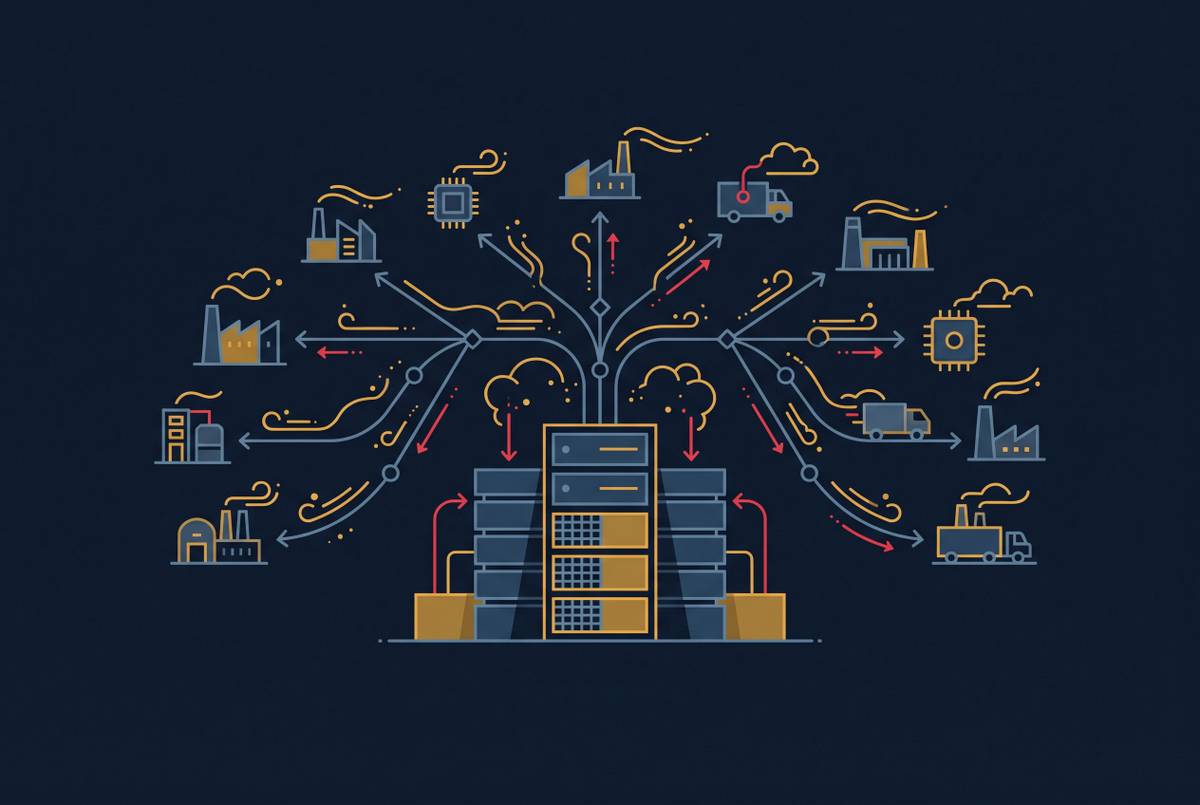
Meeting a compressed delivery timeline requires that a change in one part of the design propagate correctly across every system it touches, power, cooling, cable, documentation, procurement, instead of triggering a manual rework cycle across a dozen disconnected tools.
The coordination problem inside a pre-committed, high-density facility is a data architecture problem. If every discipline writes to a shared, structured model, a rack move can cascade correctly through power, cooling, and documentation without anyone chasing it by hand. If each discipline keeps its own separate representation of the same facility, that cascade cannot happen reliably, no matter how skilled the team is.
AI has a real and bounded role to play here. None of it is engineering judgment, and none of it should be mistaken for engineering judgment.
Deterministic rules belong in the parts of the workflow where precision and compliance are not negotiable. Handoff acceptance criteria. These need fixed, auditable rules, not probabilistic suggestions.
Operations readiness has to be treated as a design-phase deliverable, not a task for after commissioning. The DCIM platform's tag structure, its asset identifier strategy, and its schema alignment with the BIM model should be specified as contract deliverables before construction even begins, with acceptance criteria defined up front at turnover.
Institutional knowledge that exists only in the heads of the integrators who built the system does not count as a handoff.
ArchiLabs Studio is built for exactly this delivery environment. It gives a project a single connected workflow across layouts, power and cooling coordination, cable routing, documentation, RFI management, and operations-ready handoff, so a change in one part of the design propagates correctly through the rest rather than setting off a manual rework cycle across disconnected tools. That is the shape a delivery workflow has to take once the timeline itself stops being negotiable.
What delivery teams should take from the pre-leasing market
Pre-leasing has turned the delivery window into a fixed constraint that design and construction teams do not get to negotiate. The only variable those teams actually control is the coherence of their own workflow.
The grid connection is the asset that made the deal possible in the first place, and the team's job is to not waste it through slow coordination or avoidable rework.
In frontier markets, where local support infrastructure runs thinner than in established hubs, the margin for coordination failure narrows. Teams that can execute without leaning on an established vendor ecosystem are the ones winning the work in those markets.
The shift to AI workloads means load assumptions have to get revisited for every new project. Power and cooling now require co-design from the start, and that requirement makes old-style discipline-by-discipline sequencing a delivery model that no longer holds up.
Traceability matters more than it ever has. Every RFI answer, every design decision, every equipment parameter should trace back to the information that supports it. Traceability is a schedule protection mechanism. A team that can answer why a decision was made and what it affects, without digging through PDFs and old email threads, moves faster than a team that cannot, and in this market, speed is the whole competition.
The structural pre-leasing dynamic is durable. The forward pipeline runs deep, and the compressed delivery timelines it produces are a permanent feature of how this industry now operates, not a temporary stretch of pressure to wait out.