Automated Change Propagation as a Portfolio Governance Requirement After Rack Moves
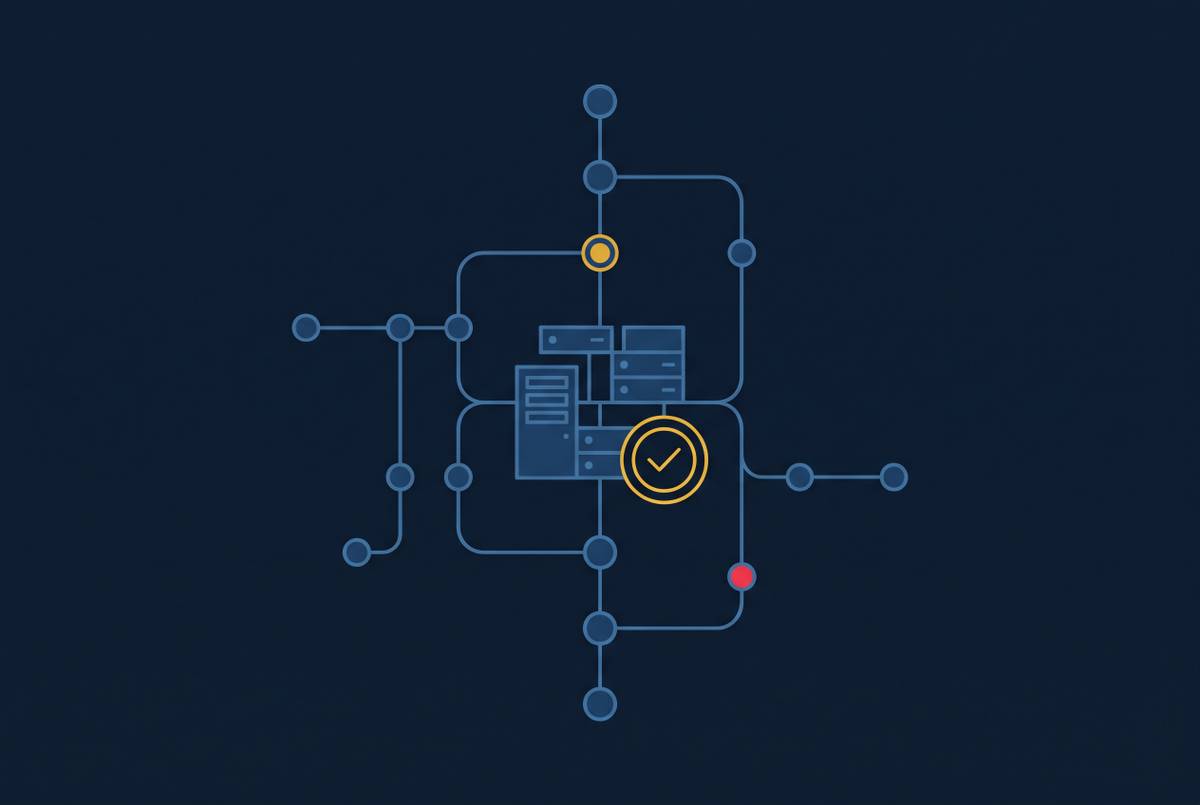
Automated propagation keeps power, cooling, and cable records aligned after each rack move.
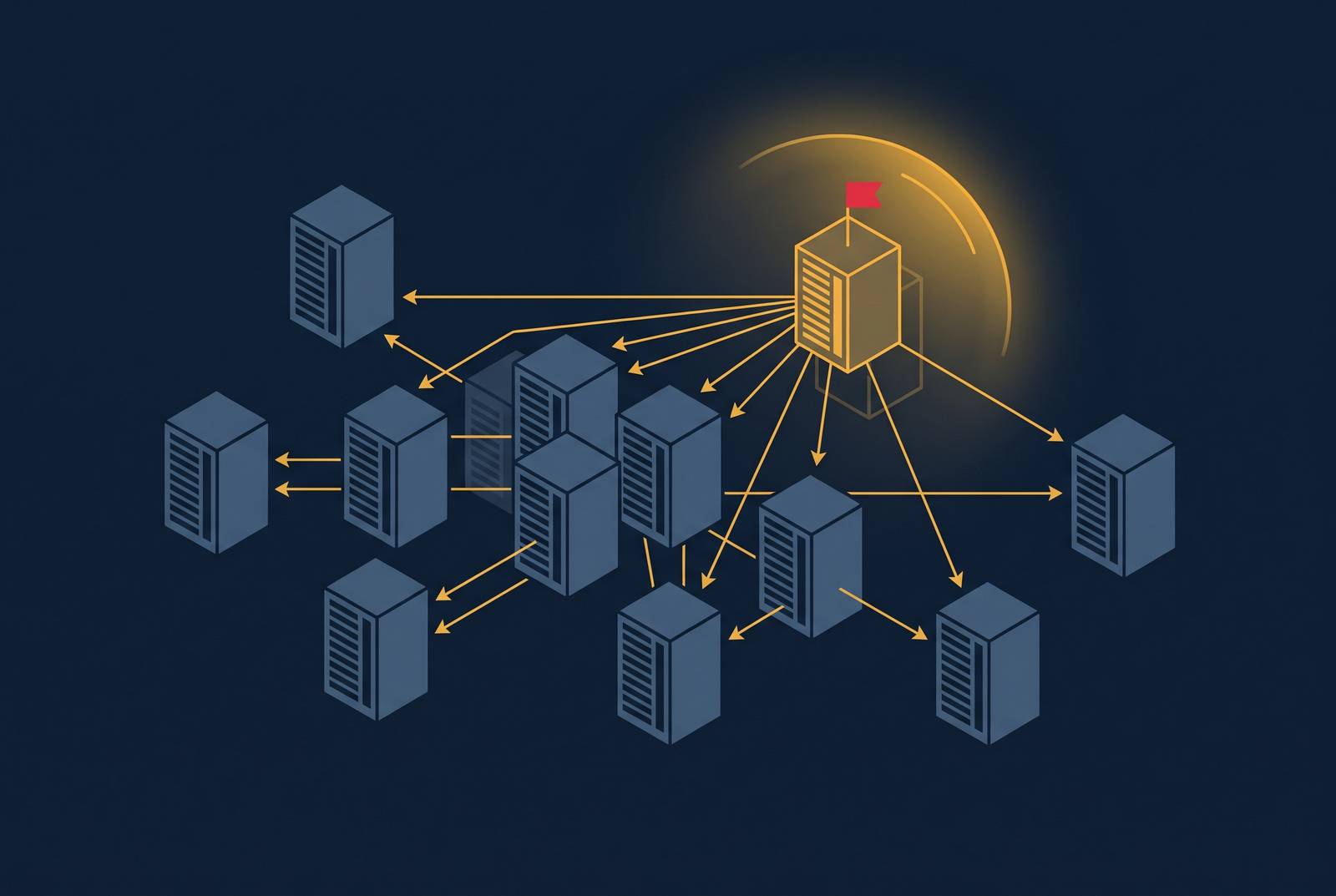
Automated change propagation after a rack move must update power, cooling, cable routing, and documentation together, before the next decision uses those records. At modern rack densities, this is a portfolio governance requirement. A platform qualifies only if it keeps dependent systems consistent, validates physical limits, and preserves a traceable change history rather than leaving teams to reconcile separate records.
Why rack density has made a rack move a portfolio-level event
CMI's 2026 construction trends report says rack loads in many new facilities are between 15 and 50 kW, up from the 5–8 kW that was common five years ago. AI compute racks already require 40–130 kW per rack, with next-generation chips projected to push that further. Location now determines much more than floor space. At these loads, a rack's position determines which power circuit, cooling zone, and fiber path it consumes. Moving it changes the demands on each of those systems.
In traditional lower-density environments, compute, power, cooling, and networking could be planned largely independently. AI workloads collapse that separation because a change in one domain changes the constraints in the others. Supermicro's October 2026 OCP portfolio expansion illustrates the physical coupling, bringing compute, 48V DC busbar, direct-to-chip liquid cooling, and networking into a rack-scale solution. The rack is an interdependent system. Relocating it means relocating the demands of that whole system.
Server nodes in modern AI facilities need hundreds of fiber connections per rack, and designs expected in the near term will need far more. Those connections need routes through the facility, and cooling needs airflow or access to the right liquid-cooling circuit. The records must describe those relationships as they change. A single rack move therefore radiates outward through power, cooling, cable paths, and the documentation of all three.
What must cascade when a rack moves — and across which systems
The power layer has the circuit assignment, panel schedule, power budget allocation, and UPS load distribution. Each must reflect the rack's new location and load. A rack moved into a higher-density zone without circuit revalidation can quietly push a panel toward its capacity limit. The load must be checked against the infrastructure serving the destination.
The cooling layer assigns each rack position to a cooling zone, with airflow or liquid-cooling circuit requirements. Moving a high-density rack changes the zone's thermal load and may invalidate the cooling assumptions for adjacent racks. Liquid cooling adds physically fixed piping tolerances and pressure circuit assignments. Crossing a cooling loop boundary changes the work required. What looks like a short move on a floor plan may therefore require more than a change of coordinates.
The cable and fiber layer must reflect the new routes and connections. Undocumented fiber rerouting can block the next move and slow troubleshooting because the recorded path no longer describes the actual one. Fiber jumpers crossing power cords and unused rack space repurposed as storage can restrict exhaust airflow, contribute to PUE drift, and slow later moves, adds, or changes.
The asset record layer spans DCIM, EPMS, BMS, and CMDB records, which must reflect the new position, load, and connections. These are separate systems serving different operational and compliance functions. DCIM sits between the BMS at the facility layer and ITSM or CMDB platforms at the IT service layer. All those layers need the changed information. In most environments, however, a change in one does not automatically update the others.
What breaks when the cascade doesn't happen
If the power budget retains the old allocation, it can show available capacity that no longer exists at the destination. If the cooling model retains the old thermal load, it can report headroom that the moved rack has already consumed. The next rack is then placed based on assumptions that are wrong. The failure is caused by the gap between the physical change and the records used to authorize later work.
That gap can spread beyond the hall. When site records feed portfolio capacity models, an unpropagated move passes its error into the information investors and operators use across multiple sites. Further moves can compound the error.
The same chain applies to fiber routing and energy reporting. An undocumented reroute leaves the next move starting from an unknown state, while misrouted jumpers that obstruct exhaust airflow can contribute to PUE drift. Energy reporting may show the effect even when the records fail to show what caused it in the facility. Troubleshooting then starts with reconstructing what actually changed. Automation does not repair that weakness by itself, because a flawed policy operating on stale records can spread mistakes faster than an isolated manual error.
Why fragmented tooling makes accurate propagation structurally impossible to sustain manually
Most enterprise environments combine generations of compute, storage, network, and facility-management equipment with disparate interfaces and inconsistent data models. The same rack change must therefore be represented in systems that do not share a common way of describing it. People have to carry the change from one system to another by hand. With projects as large and fast-moving as they are today, better habits alone cannot keep every dependent record correct.
General-purpose BIM has a similar break between design and operations. Automatically laying out hundreds of server racks or generating cable tray networks requires significant custom code in tools such as Revit, where scripting is not a first-class part of the architecture. A detailed model is not automatically a connected workflow. If operational changes do not flow back into it, the model and the facility begin to diverge after first occupancy. Its visual detail does not make its capacity assumptions current.
A full as-built model is a prerequisite for digital twin integration, but only if it stays live. A rack move left out of the model for hours can make that model unreliable for the next capacity decision. Staff then encounter the operational equivalent of an RFI. They find missing, unclear, or conflicting information and must resolve it before relying on the record. Automated propagation addresses the structural cause of that cycle by connecting the change to its dependent records, rather than asking people to rediscover each dependency.
What automated change propagation must actually do to qualify as a governance control
Updating DCIM but not BMS, or the model but not the power schedule, leaves a partial record that can mislead operations. Speed alone is not the qualifying test. The requirement is that power, cooling, cable, and documentation agree on the changed state when they are next used. An automatic update to only one layer does not meet that requirement.
Traceability is the next test of the control. Every RFI answer, design decision, and equipment parameter must be traceable to the information supporting it. For colocation operators, audit requirements, data-sovereignty obligations, and classified workload constraints make this a compliance need. The change history must explain what changed and why. Without that link, a record may look up to date yet lack the evidence to back a decision.
The workflow must also distinguish judgment from deterministic validation. AI suits routing suggestions, capacity scenario modeling, and anomaly flagging, where it must make sense of inputs that vary. ST Telemedia Global Data Centres' work with Phaidra applies AI control to a hybrid air- and liquid-cooled environment, illustrating that role. Circuit load validation is a different kind of task. Checking a load against a breaker's rated capacity is a lookup against a physical limit, while cooling zone boundaries and fiber port assignments likewise require deterministic rules.
Those rules need structured equipment data to work. Specifications trapped in manufacturer PDFs must flow into models, schedules, and validation rules so that the system knows the rack's load, cooling requirements, and fiber count without manual re-entry. This is where connected architecture becomes essential. ArchiLabs Studio is designed around a project operating system linking layouts, critical-systems engineering, cable routing, documentation, and operations-ready handoff in a single workflow. That architecture addresses propagation as a structural requirement rather than an automation feature added to a disconnected tool.
The organizational and economic cost of treating rack moves as local events at portfolio scale
The cost of a stale rack record does not stay with the team that missed the update. It appears later as rework, commissioning delays, energy inefficiency, and planning decisions made against inaccurate capacity. CMI's report says millions per month in revenue are lost when commissioning a 60 MW facility is delayed. Multiple halls in commissioning multiply that exposure across a portfolio. The downstream errors from an unpropagated rack move enter a setting where delay is expensive.
Uptime Institute's 2026 PUE data shows an industry-average gap between smaller and larger facilities, which backs the case for spending on monitoring, cooling control, and power management. Mixed-age portfolios make that work harder when records do not reflect physical changes. Operators cannot clearly diagnose a gap they cannot accurately see. The organizational burden is the repeated effort to reconcile the floor, the models, and the reports before teams can act on them.
What portfolio governance for rack moves looks like when the tooling is built for it
With propagation built into governance, a rack move becomes a defined workflow with deterministic downstream effects. The power schedule, cooling zone model, cable routing record, DCIM asset list, and as-built documentation reflect the move as part of that workflow. Human review is still needed for decisions that call for judgment. It is no longer spent re-entering the same change across power, cooling, cable, schedules, and sheets.
That way of working starts before the facility reaches turnover. BIM data handed over incomplete or disconnected from DCIM, EPMS, and BMS leaves operations without the connected record that later moves require. Structured handoff is therefore the finish line for design delivery. The design record and operational record must stay up to date as one account of the facility, even though separate systems do different jobs. A completed model cannot substitute for that continuity.
For colocation operators, each move then has a queryable history of the decision, the authority, and the downstream effects without manual reconstruction. For owner-operators and design firms that manage hyperscale and enterprise programs, this helps when they next plan capacity, make a client commitment, or decide what equipment to buy. Teams can still use the record when work passes from one team to another. Portfolio governance succeeds when those teams can make the next decision at speed because the data describes the facility as it actually exists.