Data Center Reference Architecture Governance and Version Control
Governed version control keeps data center design, construction, and operations synchronized.
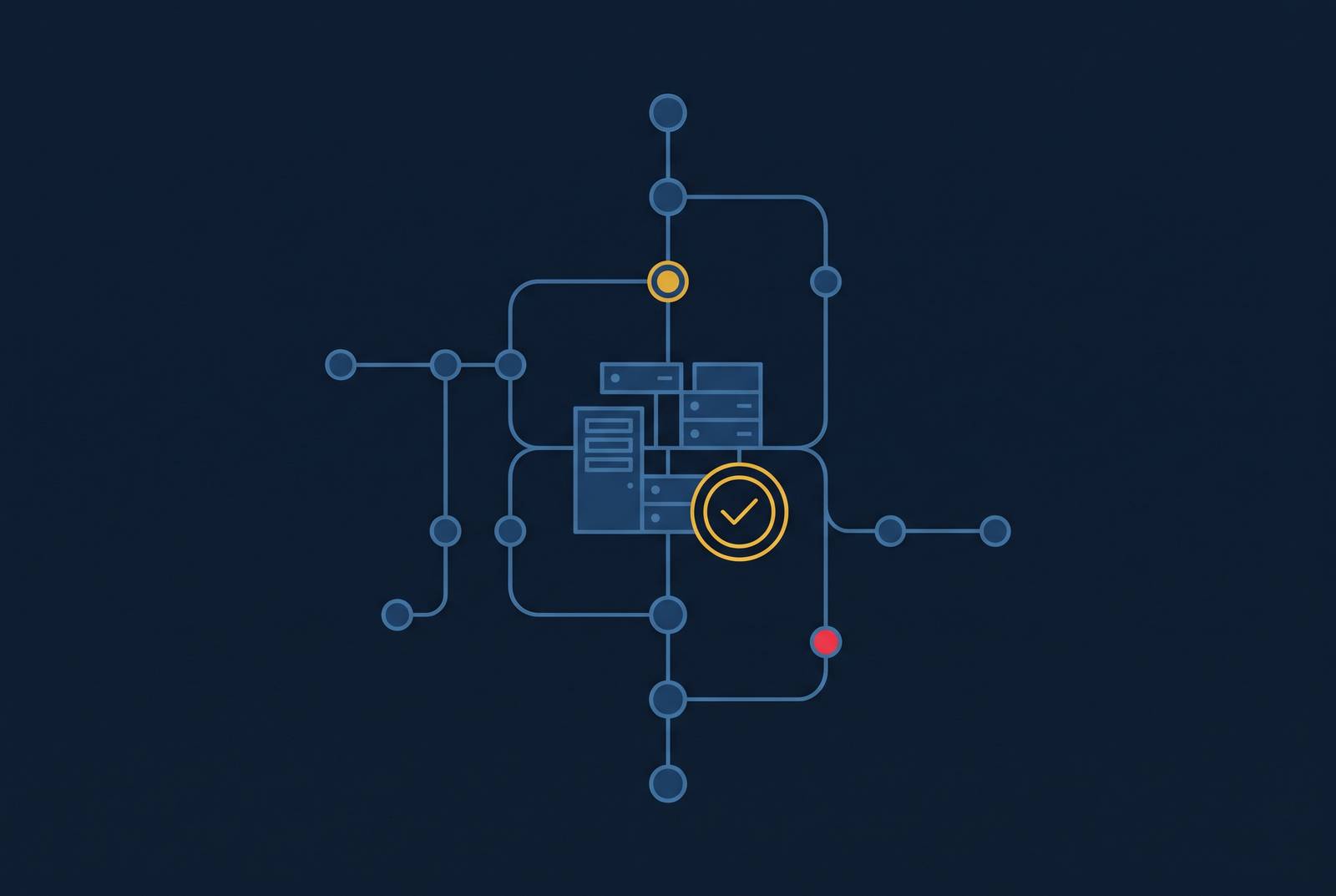
DCIM-ready BIM handoff depends on structured asset data, shared identifiers, and an approved version history that connects design models to operations without manual re-entry. Data center reference architecture governance and version control provide that foundation. The architecture is reliable only when authorized changes propagate across design, construction, and operational systems, keeping the reference aligned with what was built and how it is run.
Why reference architectures drift and what that drift actually costs
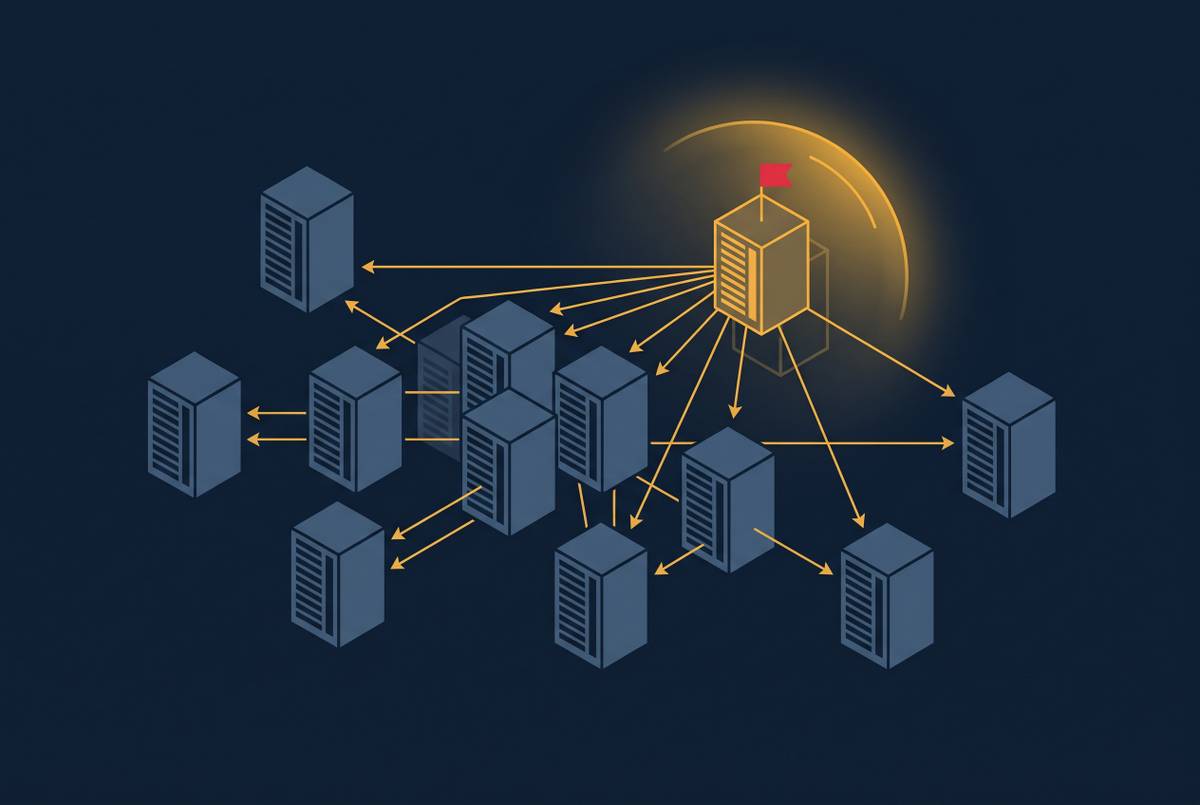
The architecture document shows a rack in one place, while the rack is somewhere else on the floor. Power models still use the old assignment, cooling layouts use a different revision, and cable schedules match neither. Procurement then relies on assumptions that no longer match what is being installed. Because the reference architecture is the master document, an outdated, uncontrolled copy is an active risk.
Tight delivery schedules cause this drift even when no one has been careless. Cooling systems are being re-engineered in months rather than years, while racks once seen as high-density are becoming standard. Projects are also growing in scale and complexity. A document maintained only as a project deliverable cannot keep pace with those changes. Its release may mark a completed design stage while the facility has already moved beyond it.
The cost appears when a decision cannot proceed. The capacity model says there is room, facilities says power is constrained, and the CMDB records a different asset count. A change request sits in a queue because nobody trusts the source data enough to approve it. More copies do not resolve the disagreement. Version control holds governance together because downstream teams need an approved record they can act on, and another view of the facility leaves them without one.
What makes a data center reference architecture structurally different from a general IT architecture document
A data center reference architecture must set the rules for the physical, electrical, mechanical, and operational layers together. Those layers do not naturally share a data model. BMS controls mechanical and environmental plant, EPMS monitors the electrical path from utility to rack, and DCIM manages IT assets and capacity. DCIM consumes data from the other two. A reference that covers only one layer therefore governs a slice of the facility, leaving the connections to other systems outside its control.
When a rack needs more power, it affects UPS loading, cooling demand, cable tray capacity, and breaker allocation. Higher fiber density for AI workloads also makes a rack assignment a fiber routing and pathway congestion problem. A stale equipment specification can consequently become a procurement problem that overtime cannot recover. Unlike a document that describes only a logical design, this architecture must preserve the relationships needed both to build the facility and to operate it afterward.
How version control discipline actually works in a governed reference architecture
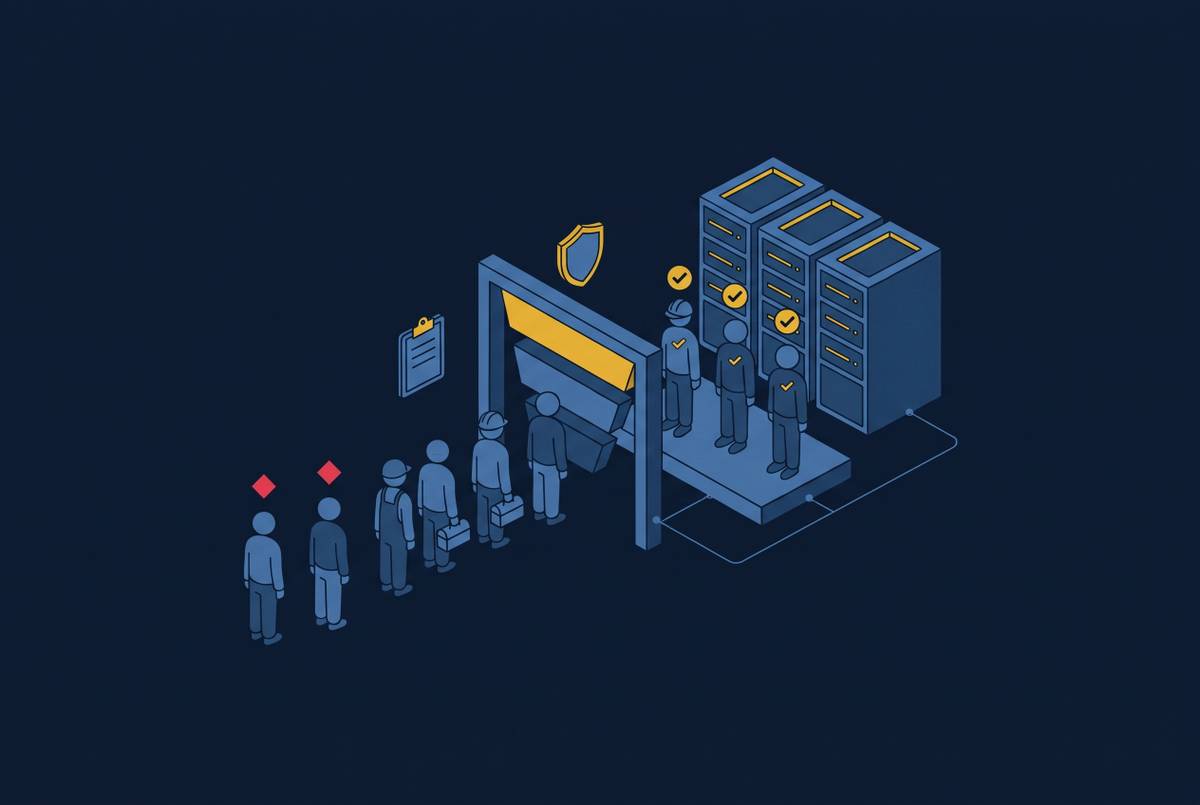
A governed workflow starts with one authoritative source and a defined way to issue, number, and supersede its versions. Every version needs a state tag, namely draft, under review, approved, or superseded. Superseded versions are kept so they can be used in an audit. The latest attachment is not automatically the authority. A supersession record establishes which version governs current work while preserving the earlier basis for decisions.
Change authorization determines what can go into the approved version. Each change must trace to the information that authorized it, including an RFI answer, a design decision, or an equipment substitution. Recording the engineer’s name alone does not meet that requirement. The decision record gives the reason the change was accepted as well as the name of the person who edited the model. Without that gate, version numbering records activity but does not establish authority.
Before authorization, change requests should be scored for schedule impact, procurement impact, cost exposure, commissioning impact, and downstream coordination risk. This follows the same scoring logic as RFI management. An unresolved architecture change has the same risk profile as an unresolved RFI because either can block dependent work. Even a clarification with little cost at stake can hold up electrical energization or integrated systems testing. Cost alone is therefore a poor guide to review priority.
The approved change must also reach the full scope of the architecture, including spatial layout, power design, cooling configuration, cable routing, and asset parameters. Approval is the gate for releasing that change into the governed reference and its dependent outputs. Automated design outputs need the same version tags as engineer-authored changes. Their origin does not exempt them from review. A cable or fiber routing decision must be locked into the reference before procurement, or field re-routes can cascade into submittal revisions and commissioning delays.
Where version control breaks down in practice: the four failure patterns
Late standards create the first failure pattern. When asset IDs and parameters are defined after ninety percent design, the handover has to be redone twice. The architecture and the operational system lack a common identifier, making version tracing across them impossible.
Viewer-only documentation creates the second failure pattern. A model may capture geometry accurately while omitting WBS, quantities, and commissioning data. Unless the model is tied to schedule, cost, and tests, a polished drawing cannot establish whether the governed information needed for handoff is present.
Post-construction DCIM configuration creates the third failure pattern. Waiting until occupancy removes the opportunity to capture as-built conditions incrementally, but BIM and DCIM have mismatched schemas and asset identities that impede integration. By the time integration begins, the construction team may have demobilized and submittals may be scattered across project management platforms. Accurate capture becomes a reconstruction exercise after delivery. Retrofitting integration after handover is significantly more expensive and rarely complete, leaving operations with a structurally incomplete record.
Fragmented domain ownership creates the fourth failure pattern. Power, cooling, cable, and layout teams maintain separate versions in separate tools, with no single reference capturing their interdependencies. A change in one domain does not automatically reach the others. Each team can follow its own process faithfully. Yet the combined result remains inconsistent because the data structures cannot keep those separate records synchronized, even when everyone intends to maintain a single source of truth.
Why structured data propagation is the mechanism that makes version governance scalable
PDFs and drawing sets cannot propagate a change. Every downstream team must read the revision and enter the changed information by hand into its own tool. That repeated entry creates opportunities for version divergence at each boundary. The document format is part of the fragmentation. At data center scale, governance is maintainable only when structured, machine-readable data lets an authorized change flow into dependent records without repeated transcription.
Equipment specifications expose the same problem earlier in the workflow. Data in manufacturer PDFs must be extracted into models, schedules, and validation rules so that teams can use it without copying it into each one separately. Whether a value comes from a spreadsheet, an engineer, or an algorithm, it needs the same authorization and version discipline before downstream teams can rely on it.
To make that flow reach operations, schema alignment and a shared asset identifier strategy must be established before construction begins. The schema defines how information is structured across design and operational systems, while the identifier connects records for the same asset. Neither can be left for negotiation at commissioning. Design-to-as-built reconciliation must also be a formal workflow with defined acceptance criteria. A walkthrough at closeout cannot substitute for a record that has captured authorized changes throughout delivery.
ArchiLabs Studio is built on this connected-workflow premise, bringing layouts, power and cooling coordination, cable routing, documentation, RFIs, and operations-ready handoff into a single workflow. Its relevance is the shared data model. A rack move should not require manual reconstruction across power, cooling, cable, schedules, and sheets. For software intended to bridge BIM and operations, the criteria follow from that requirement, including structured asset data, common identifiers, schema alignment, and traceable versions.
How AI and deterministic rules divide responsibility in a governed reference architecture
Automation preserves control when governance assigns AI to layout generation, capacity scenario modeling, anomaly detection, and spec extraction, while deterministic rules validate version-tagged outputs against rack power caps, cooling load limits, cable pathway ratings, and asset identifier schemas before approval, making the division a governance decision.
How does an operations-ready handoff deliver DCIM-ready BIM data?
The final version-control test is whether operations receives complete, structured, traceable data. BIM data that reaches turnover disconnected from DCIM, EPMS, and BMS has not reached the operational finish line. Integration is not a task to begin afterward. DCIM must be provisioned and partially configured before construction is complete, which requires operational parameters to exist as structured data from the earliest design phases.
Shared identifiers make incremental population possible as construction progresses. They connect as-built conditions to the same assets represented in the design, rather than forcing the integration team to reconstruct identities after demobilization. Early schema alignment gives those records a common structure. The systems that receive the records still have different jobs to do. But the version reaching each can reflect the same governed reference rather than three separately maintained interpretations of a document.
The handoff must include the decision record as well as asset parameters. Every RFI answer, design decision, and equipment parameter should trace back to its supporting information, so operations can understand why the facility was built that way. Uptime Institute’s 2026 Annual Outage Analysis still names power as the leading cause of impactful outages. The record reaching EPMS therefore needs to show the present configuration of each power path and explain its design intent.
At handoff, a team that governed well can reconcile installed assets against an approved baseline and follow their changes back to the decisions that authorized them. A team without that record must first piece together the information it needs to make a judgment from scattered submittals and field markups. That distinction extends into the next upgrade. Teams can assess future AI-density changes using power, cooling, routing, and capacity information they trust, without having to recover the data all over again. The governed reference architecture is not a project deliverable but the operational asset that makes every future change manageable.