Seismic Zone Classification and Structural Cost Premiums for Data Centers
Seismic zone classification locks in structural costs before construction even begins.
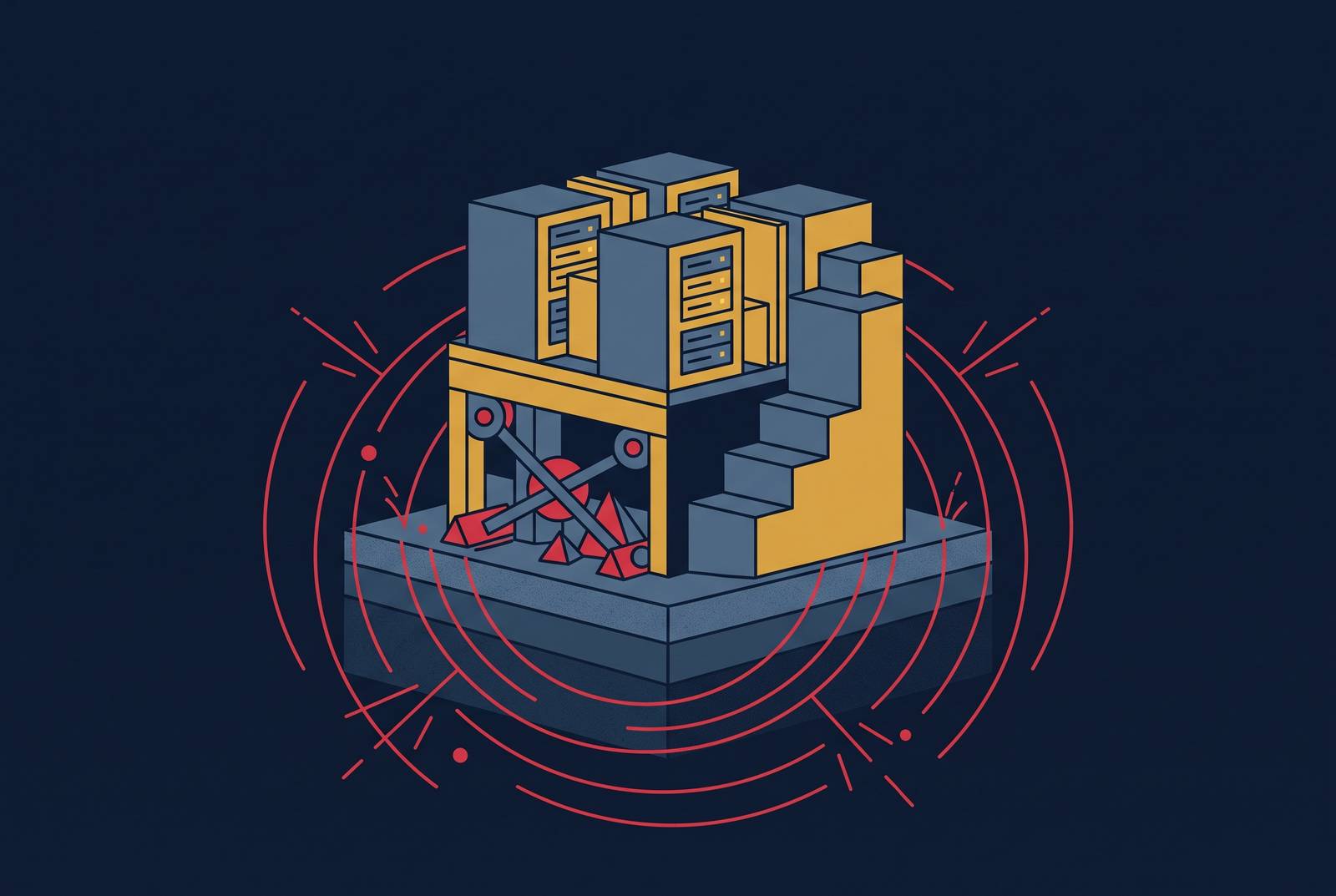
More than half of significant data center outages cost over $100,000, and one in five tops $1 million. Those numbers matter here because seismic zone classification is the upstream decision that shapes how much a facility spends to avoid becoming one of those statistics. It is not a box a design team checks after the architecture is settled. Zone, Risk Category, and which edition of the design code applies all get locked in before a contractor is even hired, and together they decide what structural system goes into the ground, how much anchorage engineering the equipment needs, and what the final number on the budget looks like. Treat seismic classification as a line item you plan for from day one.
Risk Category IV and Seismic Design Category assignment for data centers
Start with Risk Category. Under IBC 2024 Table 1604.5, Risk Category IV covers essential facilities, buildings where losing function creates a substantial hazard to the public. That's the same bracket hospitals and emergency operations centers are in, and depending on their function, data centers can be there too. It's a serious classification, and it comes with a serious consequence: components needed to keep the facility running can be assigned an importance factor of Ip = 1.5. Anchored equipment has to resist meaningfully more seismic force than the same gear would in a standard Risk Category II office building.
From there, Seismic Design Category (SDC) gets calculated. SDC comes from combining site hazard, the spectral acceleration values SDS and SD1, with Risk Category. Because Risk Category IV pushes the math upward, most data centers are in SDC D or higher even on sites where the raw ground-shaking hazard is only moderate. SDC F is at the top of that scale, the most demanding classification IBC and ASCE recognize, and it brings the toughest structural and non-structural requirements with it.
SDC isn't just a label. It decides which lateral structural systems are even allowed, which code exemptions disappear, and which anchorage rules apply to every piece of equipment in the building. Both feed into the same question every project has to answer early: what does this site's classification actually demand, and what does that demand cost? TIA-942-A's layered classification system and OSHPD Special Seismic Certification sit alongside IBC as the compliance framework for data center-specific seismic requirements.
ASCE 7-22 Chapter 13 requirements inside a data center
ASCE 7-22 Chapter 13 governs all nonstructural components in a building (everything that is not part of the primary lateral or gravity system), and equipment such as 42U and 48U server racks and cabinets, large UPS systems (500+ kVA), battery cabinets (lithium-ion and VRLA), and associated mechanical and electrical gear commonly requires PE-stamped anchorage calculations.
That calculation, the Fp equation in Section 13.3.1, factors in the site's spectral acceleration, a resonance amplification term for how the component itself responds to shaking, an over-strength factor, a ductility reduction factor, the importance factor Ip, and where in the building the component sits. That last variable, height, affects how much seismic force upper-floor equipment must be designed to resist. Shaking amplifies as it moves up a structure, and in SDC D markets like Reno, the forces calculated for upper floors can represent a substantial share of the equipment's own weight, sometimes even exceeding the acceleration the building itself was designed around. A rack on the top floor of a multi-story data center faces a meaningfully different seismic reality than the same rack at ground level.
Code edition matters too. ASCE 7-22 revised the height amplification formula from the ASCE 7-16 version, so a project still designing to the older edition risks being under-designed for forces the newer formula would catch. And because Section 13.1.3 pulls in any component with an importance factor above 1.0, which in a Risk Category IV facility means Ip = 1.5 for anything tied to continued operation, the practical result is that almost every piece of permanently installed equipment needs its own engineering sign-off. That list runs long: 42U and 48U server racks and cabinets, large UPS systems at 500 kVA and above (often weighing several thousand pounds), lithium-ion and VRLA battery cabinets, and the mechanical and electrical gear tied to them. The scope doesn't stop at equipment, either. Seismic-rated mounting systems, secured cable pathways, and reinforced ceilings and raised floors all fall under the same non-structural umbrella. IBC 2024 Section 1613 and CBC 2025, with its California-specific amendments, layer additional requirements on top of ASCE 7-22 in some jurisdictions.
Seismic zone's translation into structural system selection and primary cost premiums
SDC doesn't just add paperwork. It decides which structural systems are even on the table. In high-SDC markets, moment-resistant frames, shear walls, and base isolation systems stop being optional upgrades and become the only code-permitted or economically sensible way to build. A simpler frame that would pass muster in a low-hazard region simply isn't viable once SDC climbs.
Base isolation is at the expensive end of that spectrum. It substantially cuts the seismic force that reaches the structure, but that reduction costs money upfront, in isolators, in foundation detailing, in the engineering to design around a building that's meant to move independently of the ground beneath it. A lighter superstructure and lower anchorage forces on every piece of equipment inside appear later, produced by that upfront investment. Shear walls, by comparison, tend to be the more cost-efficient answer for SDC C and D markets, resisting lateral force without the full price tag of an isolated structure. Damping systems sit in a different lane again, absorbing and dispersing seismic energy rather than blocking it outright, and they show up most often in Tier III and Tier IV projects chasing specific performance targets rather than just code minimums.
Put a number on it: seismic demand in high-SDC markets meaningfully raises design complexity over a low-seismic equivalent, and that premium sits on top of the baseline structural budget, not folded inside it. A 2022 peer-reviewed case study of an internet data center built to Chinese seismic intensity VIII found seismic content made up a notable share of total construction cost, a real, floor-level number for what this scope actually adds once a project breaks ground.
None of these choices happen in isolation, either. A facility that spends more on isolation or damping upfront often spends less downstream on anchorage and equipment certification, so the smart move is to look at the whole system budget rather than pricing each line separately. And structural seismic decisions collide with other site hazards in ways that can't be resolved late. Elevating equipment for flood protection, for instance, adds mass at height, which raises seismic vulnerability at exactly the point in the building where shaking is already amplified. That conflict has to get worked out at the design basis stage. Trying to value-engineer it later just means picking which hazard you're willing to lose ground on.
Equipment anchorage as a distinct cost line: what PE-stamped calculations cost per rack
Structural cost is the headline number. Anchorage is the line item that catches owners off guard. Multiplied across a full data hall, it stops being a rounding error.
For general commercial equipment in SDC C through F buildings, seismic anchorage engineering spans a wide per-unit price range. Data center racks fall inside that range, but the Ip = 1.5 requirement and the higher SDS values common to data center sites push both the scope of work and the paperwork burden toward the top of it. And the obligation doesn't shrink just because a project is buying in bulk. Rack count doesn't drive the calculation the way people expect. Large UPS units, battery strings, and generator switchgear are each unique enough to need their own individual calculation and their own PE stamp, no matter how many identical racks sit next to them.
Skipping this step isn't just a compliance risk. It's a hardware risk and a business risk at once. Racks that topple in an earthquake can destroy millions of dollars in equipment and sever fiber connections in the process, and the downtime that follows compounds the hardware loss rather than replacing it. Getting the installation right requires certified engineers to sign off on every component, with documentation covering anchor selection, spacing, and the exact attachment method at each mounting point. That's schedule work, not a closeout task to squeeze in at the end of a project. And it doesn't stop once construction wraps. Anchoring, connection points, and isolation components need regular audits over the life of the facility, making this a maintenance line. PE-stamped seismic anchorage calculations for data center equipment carry a material per-rack cost with fast turnaround options as of 2026, and at scale across a data hall this becomes a material budget line.
Geography's compounding of seismic cost: the high-hazard, high-logistics market problem
Seismic zone rarely acts alone. Removing any one of those factors still leaves the site looking expensive. Combining them compounds the premium.
Northern Nevada tells a related but different story. Reno sits in SDC D, with SDS values high enough that lateral design forces can represent a large share of equipment weight at upper floors. Hyperscale developers have poured investment into the region partly on the bet that it's cheaper to build there than in California. That bet holds on labor and land, but the seismic math narrows the gap more than most site-selection models account for. California, for its part, layers CBC 2025 amendments on top of ASCE 7-22, and the combination of high hazard, OSHPD-influenced certification expectations, and labor costs makes it one of the most expensive structural delivery environments in the country. None of that is a surprise to anyone who has built there before.
The broader lesson travels beyond any one city. A site chosen for cheap land or easy power access can lose that advantage entirely once SDC enters the picture, because the structural complexity premium can erase savings made elsewhere in the deal. Each mitigation measure needs to be checked against what it does to the others, at the design basis stage, before the site decision is final. Anchorage, AK illustrates the compounding effect, where data center construction costs run well above national norms in 2026, with seismic demands layered on top of extreme cold, permafrost, and high freight costs, and the Mountain region labor multiplier is substantially above the national baseline.
The global baseline: where seismic premiums sit inside the larger data center construction cost structure
Zoomed out, seismic cost is one piece of a much larger number. Average global data center construction cost, shell and core, rose substantially per megawatt between 2020 and 2025, and JLL projects another increase per megawatt in 2026. Median cost in 2026 is already up from full-year 2025, and the average, pulled higher by the largest hyperscale builds, has climbed sharply over the past year.
Electrical systems usually claim the largest plurality of a data center's total budget. Structural cost is a smaller slice of the pie by comparison, but the seismic premium acts as a multiplier on that slice specifically in high-SDC markets, so a small share of the total can still mean a very large dollar figure. On a project already running at a high per-megawatt cost, the seismic content alone worked out to a multi-million-dollar scope item that belongs in the earliest budget draft, not buried in contingency.
Scaling that logic across the industry makes the exposure serious fast. Tens of billions of dollars in data center construction broke ground in 2025 alone nationally, and the aggregate exposure to seismic cost variance across that pipeline is substantial.
Seismic classification's interaction with Tier target and performance-based design objectives
Uptime target and seismic classification don't operate on separate tracks. Tier III facilities are built for very high uptime, Tier IV for even more, and those targets aren't just about power and cooling redundancy. They carry structural and non-structural resilience commitments that have to hold up even while the ground is moving.
TIA-942-A ties Tier level to structural and non-structural seismic requirements, but the fit isn't always clean. A Tier IV facility built in SDC B faces a genuinely different design problem than the same Tier IV target pursued in SDC E. The high-hazard site needs a design strategy built around the specific resilience the operator is promising. A 2020 peer-reviewed paper proposed a seismic design basis built specifically for Tier III and Tier IV facilities, aimed at delivering consistent resilience regardless of site, and it flagged that the current mix of prescriptive and performance-based rules still contains real inconsistencies. The framework, in other words, is still catching up to the problem.
That's the gap performance-based design tries to close. Instead of aiming at code-minimum force levels, it sets explicit targets for how much functionality a facility is allowed to lose after an event. The 2022 Chinese case study applied the GB/T 38591-2020 seismic resilience framework and tracked how different mitigation choices, base isolation against damping, shifted the resilience curve. That's the real question underneath all of this: not whether a data center meets code, but whether it stays operational when the ground actually shakes. OSHPD Special.
Sources
- Seismic resilience of internet data center building with different disaster mitigation techniques - ScienceDirect
- Resilient data centre design for natural disasters | Haskoning
- Data Center Seismic Anchorage Requirements: A Complete Guide to ASCE 7-22 Chapter 13 | Palisade Engineering
- (PDF) SEISMIC DESIGN OF DATA CENTERS FOR TIER III AND TIER IV RESILIENCE: BASIS OF DESIGN
- Six Seismic-Compliant Data Center Requirements - Are You Seismic-Compliant?
- Introduction to 2024 Edition Seismic Design Category Maps July 2024
- Risk Category III and IV Seismic Design Category | UpCodes
- 2024 IBC Significant Structural Changes Risk Categories (IBC Chapter 16)—Part 5